
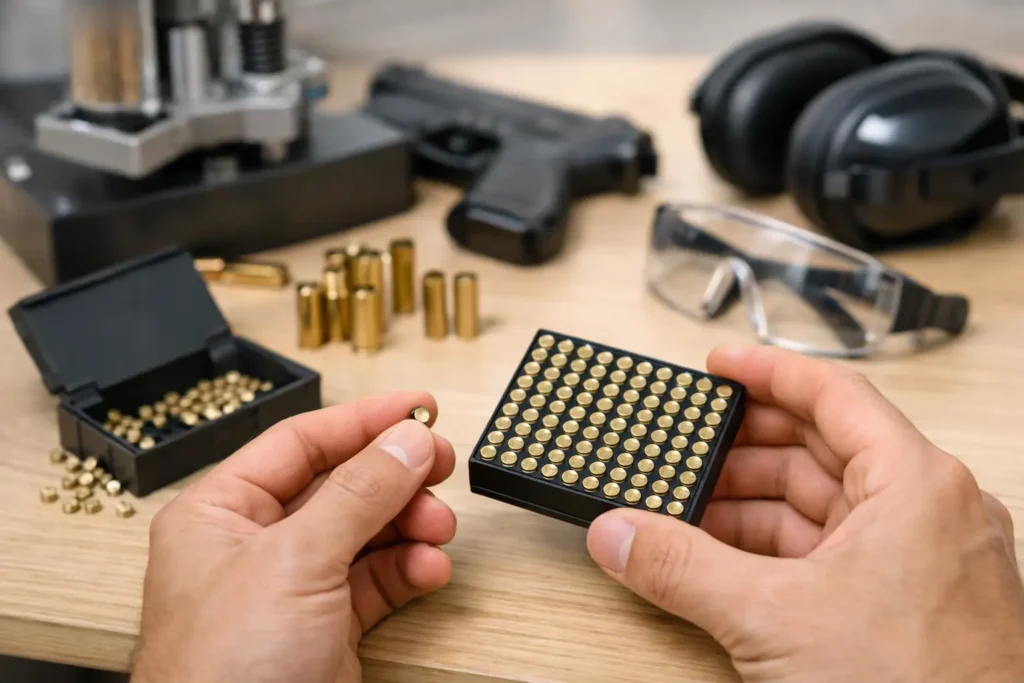
A primer may be the smallest component on the bench, but it has an outsized effect on ignition consistency, pressure behavior, and confidence in every finished round. Knowing how to buy primers safely starts before checkout: identify the exact component your published load data calls for, confirm you can legally receive it, and buy only from a retailer that handles regulated reloading components with care.
For serious reloaders, the goal is not simply to find primers in stock. It is to secure the correct primers, from a trusted source, in proper condition, without making assumptions that compromise safe load development or field performance.
Start With Published Load Data
Primer selection is not a place for guesswork. Before shopping, consult current, reputable published load data for the cartridge, bullet weight, powder, and intended application you are using. The data identifies the primer class used in testing and gives you a reliable starting point for component selection.
A small pistol primer is not interchangeable with a small rifle primer, even when the two appear similar at a glance. Large rifle, large pistol, shotshell, 50 BMG, standard, and magnum primers each have specific dimensions and ignition characteristics. Selecting by name alone is not enough. Match the exact primer type required by your data and verify the manufacturer and product designation before you place an order.
This matters most when changing any component in an established load. A different primer can affect ignition, velocity variation, and pressure. If you need to switch primer brands or move between standard and magnum options, return to published data and work up carefully within safe, documented limits. Never treat a primer substitution as a minor convenience.
Know Which Primer Class You Need
The simplest way to avoid an incorrect purchase is to begin with a clear component checklist. Record the cartridge, primer size, primer application, and whether your load data specifies a standard or magnum primer. Keep the original load manual or documented recipe close while shopping.
Common primer categories include small rifle, large rifle, small pistol, large pistol, shotshell, and 50 BMG. Magnum primers are intended for applications where a more energetic ignition source is specified, often involving certain powders or operating conditions. They are not automatically an upgrade, and they should not replace standard primers unless published data supports that change.
Brand selection can matter as well. Experienced reloaders often develop loads around the ignition characteristics of a particular primer line. When consistency is the priority, buying enough of the same lot and product line for a known load can reduce unnecessary variables. That does not mean every primer brand performs identically in every setup. It means your records, data, and careful testing should drive the decision.
Buy From a Specialized, Accountable Seller
Primers are regulated hazardous components, not general hardware. Purchase from established reloading specialists that clearly identify product types, provide accurate inventory information, use secure payment systems, and follow applicable shipping and legal requirements.
A reputable retailer should make it easy to distinguish between closely related products. Product names, package quantities, manufacturer labels, and category placement should be clear enough that you can confirm what is in your cart before payment. If a listing is vague, mislabeled, or priced far below normal market conditions, treat that as a warning sign rather than a bargain.
Avoid informal or unverified private sales where product origin, handling history, and storage conditions cannot be confirmed. Primers that have been exposed to moisture, excessive heat, physical damage, or unknown storage conditions may not deliver the dependable ignition your load requires. Authentic, properly handled components are part of safe reloading, not just a preference for premium brands.
Before ordering, review the seller’s shipping restrictions and requirements for your location. Rules can vary by jurisdiction, carrier, and order type. Confirm that you meet all applicable age, legal, and delivery requirements, and provide accurate contact and shipping details. A responsible purchase process protects both the buyer and the retailer.
Inspect Your Order Before It Reaches the Bench
When your primers arrive, inspect the outer package before opening it. Look for signs of crushing, punctures, water exposure, tampering, or other shipping damage. If the package appears compromised, set it aside and contact the seller or carrier according to their instructions. Do not assume damaged packaging is harmless simply because the contents are small.
Once you have confirmed the package is intact, verify the manufacturer, primer type, size, standard or magnum designation, and quantity against your order confirmation and load records. This quick check prevents a frustrating and potentially unsafe mix-up later, especially if you keep multiple primer classes on hand.
Keep the original packaging and lot information. Factory packaging helps protect primers, keeps product identification intact, and makes it easier to maintain accurate records. If you track load performance, the lot number can be useful when reviewing velocity data, diagnosing an ignition issue, or reproducing a load that performed especially well.
Store Primers for Reliable Ignition
Proper storage begins immediately after delivery. Keep primers in their original factory packaging in a cool, dry location away from heat, open flame, direct sunlight, and sources of impact or friction. The storage area should be secure from children, unauthorized people, and unrelated household traffic.
Do not transfer primers into improvised containers, loose jars, or unmarked boxes. Original packaging is designed to separate and identify the primers while reducing the chance of confusion. It also ensures that the product designation and lot information stay with the components.
Keep primers away from powders and other flammable materials in accordance with applicable regulations and manufacturer guidance. Exact storage practices can depend on local rules and the quantities you keep, so review the requirements that apply where you live. If you are building inventory during a shortage, do not let convenience turn into poor organization. Label shelves clearly, rotate stock thoughtfully, and buy quantities you can store responsibly.
Avoid Common Buying Mistakes
The most common primer buying errors come from rushing, substituting, or shopping by price alone. A deal is not a deal if it leaves you with the wrong primer for your documented load. Before submitting an order, slow down and compare the product name in your cart to your load data one more time.
Be especially careful with these distinctions:
- Small rifle versus small pistol
- Large rifle versus large pistol
- Standard versus magnum
- Boxer primer products versus unrelated ammunition components
- Similar manufacturer names and near-identical package designs
If you load for several cartridges, use a simple inventory system that separates primer classes physically and in your records. Many experienced reloaders reserve clearly marked storage areas for each primer type and avoid having multiple open packages on the bench at once. This is a practical habit that supports accuracy and reduces the chance of a component mix-up.
How to Buy Primers Safely When Supply Is Tight
Limited availability can push reloaders toward impulse purchases. Resist that pressure. If your preferred primer is unavailable, check whether current published data supports an alternative for your specific load. If it does not, wait for the correct component or develop a separate load using verified data and disciplined testing.
Buying extra primers when supply is available can be sensible for reloaders who use them regularly, provided the quantity is legal, manageable, and properly stored. The right reserve is one that supports consistent loading without creating a storage problem or encouraging undocumented substitutions.
Reliable ignition starts with deliberate choices: the correct primer, credible product information, lawful delivery, careful inspection, and disciplined storage. Treat every purchase as part of your loading process, and your bench will be better prepared when it is time to build ammunition you can trust.
