
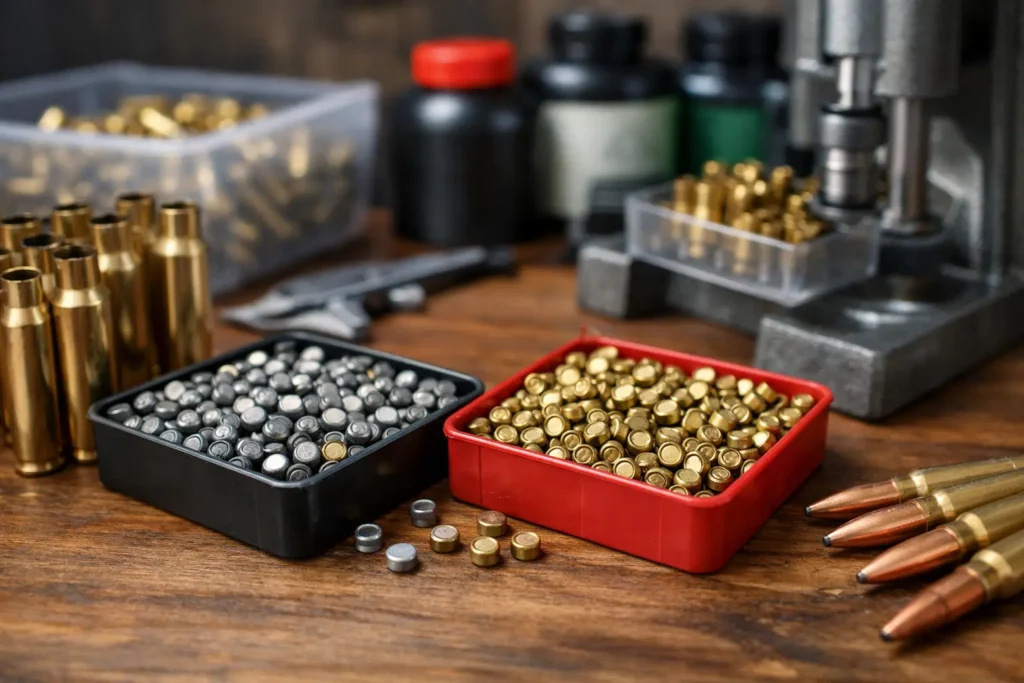
A primer shortage is rarely solved by buying the first box that appears online. A useful primer shortage sourcing example starts with a reloader who needs a known primer specification, watches inventory with discipline, and buys enough to maintain consistency without treating every restock as a panic event. The goal is not simply to find primers. It is to protect reliable ignition, documented load performance, and time at the range or in the field.
When supply tightens, experienced reloaders gain an advantage by separating real needs from substitute purchases. Primer availability can change quickly, but a deliberate sourcing process keeps component choices tied to safe, proven data rather than urgency.
Why primer shortages disrupt more than inventory
Primers are compact components with an outsized effect on a finished cartridge. A change in primer type, cup characteristics, or ignition intensity can affect a load’s behavior. That is why a shortage can interrupt a carefully developed rifle load, a high-volume pistol routine, or a seasonal hunting supply even when powder, brass, and bullets remain available.
The usual instinct is to buy any primer that seems close enough. That can create more problems than it solves. Small pistol and small rifle primers are not interchangeable categories. Standard and magnum primers are distinct products. Large rifle, large pistol, shotshell, and 50 BMG primers each have specific applications. Availability is never a reason to depart from published load data or the component specification your firearm and load require.
A better response is to make procurement part of reloading discipline. Know the exact primer classes you use, the brands that have performed consistently in your loads, and the minimum quantity that keeps your bench productive.
A practical primer shortage sourcing example
Consider a precision rifle shooter who normally uses large rifle primers for a proven hunting and match load. Their supply has reached a level that will not cover the next practice cycle plus hunting-season confirmation. Rather than searching broadly for “primers” and reacting to every result, the shooter starts with a clear purchasing brief: large rifle primers only, reputable manufacturer, factory-sealed packaging, and a quantity that covers the expected season with a modest reserve.
The first step is to search by the exact primer class. That immediately removes irrelevant small rifle, large pistol, and magnum listings. The second is to confirm whether a listed product is actually available for ordering, not merely displayed in a catalog. Real-time stock status matters during a shortage because the difference between “in stock” and “expected” can determine whether a purchase supports an immediate loading plan.
Next, the shooter compares the primer to the load documentation already on hand. If it is the same product used in established data, the decision is straightforward. If it is a different brand or designation, it should not be treated as a drop-in replacement. The shooter either keeps searching for the known component or consults appropriate published data before developing any separate, properly documented load. A shortage does not erase the need for component-specific verification.
Finally, the shooter buys a rational quantity and records the lot details upon arrival. That purchase restores continuity without draining budget or storage capacity on products that will not be used. The result is a more dependable supply position, not just a successful checkout.
Build a sourcing plan before inventory disappears
The strongest time to source primers is before a shortage becomes obvious. This does not require stockpiling without purpose. It means understanding consumption and ordering ahead of the point where a low shelf becomes a missed range day.
Start by reviewing the previous year. A competitive shooter may have predictable monthly consumption, while a hunter may need a smaller reserve but require it before a narrow pre-season window. A handgun reloader who trains regularly may need a different purchasing rhythm from a rifle owner loading a limited number of carefully tested rounds.
Set a practical reorder point for each primer class. For example, when your supply falls below the quantity needed for your next planned loading session and a realistic replacement window, it is time to begin watching inventory. The exact number depends on your shooting volume, storage practices, budget, and how difficult that primer type has been to find.
It also helps to organize components by active load. Label primer inventory clearly by type, brand, and lot. This prevents a common shortage-era mistake: assuming a box in the cabinet is suitable because it looks similar to the one you need. Clear organization supports faster purchasing decisions and preserves traceability at the bench.
Source for authenticity and fit, not just price
When primers are scarce, suspicious listings become more attractive to frustrated buyers. That is the moment to be more selective, not less. Reliable sourcing begins with a specialized retailer that identifies primer categories clearly, provides meaningful stock status, and handles regulated component orders through established procedures.
Price still matters, but it should be evaluated alongside availability, shipping conditions, order limits, packaging integrity, and seller credibility. A low advertised price has little value if the product is unavailable, incorrectly categorized, or sold through a channel that cannot support a secure, compliant transaction.
For Canadian reloaders, a focused supplier such as Lee Reloading Canada can simplify the search by keeping primer classes and recognized reloading brands easy to identify. The benefit is not merely convenience. Clear category structure reduces the chance of ordering the wrong component during a rushed restock.
Be cautious about substituting solely based on physical similarity or online advice. A primer shortage is a supply challenge, not permission to improvise. If a different primer is approved in reliable published data for your application, treat it as a distinct component and document it accordingly. If it is not supported, keep looking.
Use restocks without feeding panic buying
Shortages reward preparation, but panic buying can make supply less stable for everyone. The sensible middle ground is to buy enough for a defined purpose: upcoming competition, regular training, a hunting season, or a planned series of tested loads. That approach keeps your purchasing aligned with actual demand.
When a restock appears, verify the product name, primer class, quantity, and any purchase limits before payment. Limits are not necessarily a sign of weak supply. They can help distribute inventory among more reloaders and reduce the chance that a few oversized orders clear a shelf in minutes.
Avoid placing duplicate orders across multiple sellers unless you can responsibly manage cancellations and payment commitments. Inventory systems may update rapidly, and duplicate transactions can create avoidable complications. One confirmed order from a dependable source is more useful than several uncertain ones.
It is also worth maintaining realistic expectations about shipment timing. Hazardous-material handling and regional shipping rules can affect delivery. Order early enough that transportation time does not pressure you into poor component decisions at the bench.
Keep the bench ready while you wait
A primer shortage does not have to stop all productive reloading work. Use the interval to inventory brass, inspect and organize cases, confirm powder quantities, review published data, and document the components behind your proven loads. These tasks make the eventual primer purchase more efficient because you will know exactly what it supports.
If your preferred primer is unavailable, resist the temptation to force a substitute into an established recipe. Preserve the records for your successful loads and wait for the correct component when appropriate. Consistency is especially valuable for precision work, where a single change can require a fresh evaluation rather than a quick return to production.
The best sourcing habit is simple: buy with a plan, verify every component, and keep your inventory visible. Reliable ignition begins long before the cartridge reaches the chamber. It starts with choosing the right primer from a source you can trust, at a quantity that keeps your next intended load on schedule.