
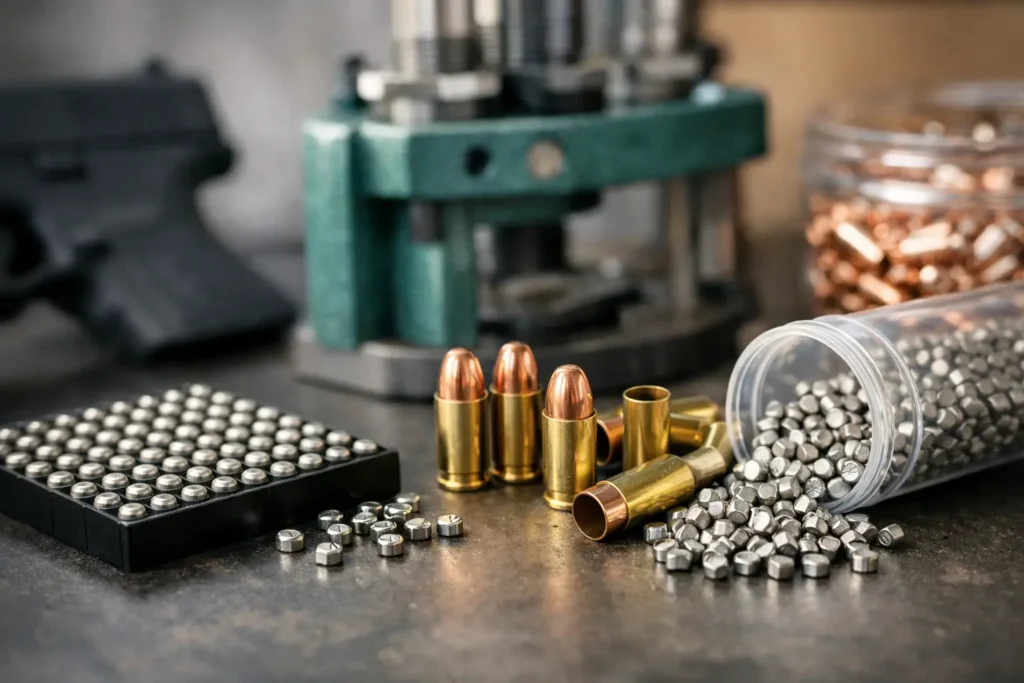
The round looks simple until a primer change turns a clean, reliable 9mm load into erratic velocity, harder seating, or a pressure curve you did not plan for. If you are trying to choose the best primer for 9mm reloads, the short answer is usually a standard small pistol primer from a trusted maker. The better answer is that primer choice should match your powder, your press setup, your pistol, and the level of consistency you expect from the load.
What actually makes the best primer for 9mm reloads?
For most 9mm Luger loads, the right starting point is a standard small pistol primer. That is the default because 9mm operates at relatively high pressure for a pistol cartridge, but it is still built around standard small pistol ignition in the vast majority of published data.
What separates a good choice from the best choice is consistency. You want reliable ignition, predictable seating feel, and low shot-to-shot variation. A primer that works fine in one pistol and one powder combination may not be the strongest option in another. That is why experienced reloaders do not ask only whether a primer will fire. They ask how it behaves across a full batch.
Primer selection matters more when you are loading near the upper end of published data, using ball powders that can be a little harder to light consistently, or tuning for competition where velocity spread and clean cycling matter. For soft target loads with forgiving powders, several standard small pistol primers may perform almost interchangeably.
Standard small pistol primers are the baseline
In practical terms, standard small pistol primers are the correct answer for most 9mm applications. They are designed for handgun cartridges with the right balance of cup sensitivity and ignition energy, and they align with how most 9mm load data is developed.
That does not mean every brand feels identical on the press. Some seat a little firmer. Some have slightly harder cups. Some shooters prefer one brand because it runs better in striker-fired pistols with lighter springs, while others prioritize low extreme spread over ignition sensitivity. Those are real differences, but they are refinements, not category changes.
If your goal is range ammo, practice rounds, or general-purpose 9mm with common powders, standard small pistol primers remain the safest and most efficient place to begin.
When small pistol magnum primers enter the conversation
Magnum small pistol primers are not the standard recommendation for routine 9mm loading, but they are not automatically wrong either. They can be useful with certain powders, especially slower or spherical powders that benefit from a hotter, more forceful ignition pulse.
The trade-off is pressure. A magnum primer can change how a 9mm load behaves, sometimes enough to require backing off and working up again carefully. In a cartridge with limited internal volume like 9mm, small changes can show up quickly. If you substitute magnum for standard, treat it as a component change, not a minor detail.
Some reloaders also use magnum primers when standard primers are unavailable and they are working from suitable published data. That can be a practical decision, but it is never a shortcut. Reliable ignition every time only matters if it comes with safe pressure and repeatable performance.
Cup hardness, ignition sensitivity, and your firearm
One of the most overlooked parts of primer selection is cup hardness. Not every pistol hits the primer with the same force. A factory-duty handgun with a robust striker or hammer spring may run a wide range of primers with no issue. A competition pistol with a reduced-power spring may not.
This is where brand preference becomes very real. Some primers are known for being more forgiving in lighter-trigger setups. Others are valued for durability and resistance to slam-fire concerns in other platforms, but can be less ideal in pistols tuned to the edge. Neither is better in every case. The best primer for 9mm reloads in a stock carry gun may not be the best one in a match pistol built around a light trigger pull.
If you have occasional light strikes, the answer is not always the primer. It could be seating depth, striker channel fouling, or spring weight. Still, primer choice can either mask or expose those issues quickly.
Seating consistency matters more than many reloaders admit
A primer that seats cleanly and consistently is often worth more than one that looks good on paper. In 9mm, where many reloaders produce volume on progressive presses, smooth and uniform seating supports both reliability and pace.
Primers should seat below flush with a firm, repeatable feel. If a certain brand gives you more variation in seating effort, pay attention. It may be a pocket issue, a brass issue, or simply a primer dimension your setup does not love. The result can be inconsistent ignition, especially if some primers are not fully seated.
For high-volume reloaders, that tactile consistency becomes part of component quality. Reliable ignition starts before the round ever reaches the chamber.
Powder choice influences primer choice
If you load 9mm with fast to medium burn rate powders commonly used for target and general shooting, standard primers are usually all you need. These powders tend to ignite easily and produce very consistent results without extra primer intensity.
If you are using denser spherical powders, especially in colder conditions or at the edge of a load window, primer behavior becomes more relevant. That still does not mean magnum primers are automatically better. It means your load development needs to consider ignition quality as part of the system.
This is why there is no universal winner across every bench. The best primer for 9mm reloads depends partly on whether your priority is soft recoil impulse, clean burn, major power factor consistency, or simply dependable function in bulk practice ammo.
Brand reputation matters, but data matters more
Most experienced reloaders already have strong opinions on primer brands, usually based on availability, consistency, and how those primers behave in their equipment. That is fair. Trusted manufacturers have earned their reputation by keeping dimensions, sensitivity, and compound quality consistent over time.
Still, no brand name overrides published load data or careful testing. Changing primer brand can affect pressure and velocity, even when both products are standard small pistol primers. Sometimes the difference is minor. Sometimes it is enough to notice on the chrono, on the brass, or in how the slide cycles.
If you switch brands, confirm the load again. In 9mm, the margin for casual assumptions is smaller than many handloaders would prefer.
How to choose with confidence
If you want a practical decision path, start with a standard small pistol primer from a reputable manufacturer and match it to published data for your bullet and powder. Load a small test batch, then check three things: ignition reliability, velocity consistency, and seating behavior during assembly.
If the load runs cleanly, groups well, and gives you zero ignition issues, you probably have your answer. There is no prize for chasing a different primer if your current one already delivers the accuracy and function you need.
If something is off, isolate the reason before changing multiple variables. A dirty primer pocket, mixed brass, inconsistent crimp, or powder metering issue can all look like primer problems at first. Good load development is disciplined, not reactive.
A note on availability
Primer selection is sometimes shaped by supply as much as preference. Serious reloaders know that availability can force substitutions. When that happens, the right move is to stay within the correct primer class when possible, use current data, and revalidate the load.
That is one reason specialized suppliers matter. Access to authentic, in-stock components from recognized brands helps keep your process consistent instead of turning every loading session into a workaround.
So what is the best primer for 9mm reloads?
For the majority of reloaders, it is a standard small pistol primer from a trusted brand that seats consistently, ignites your chosen powder cleanly, and runs with complete reliability in your firearm. That answer is not flashy, but it is the one that holds up at the loading bench and on the range.
If you are running a tuned competition pistol, an unusual powder, or a load built around a very specific performance target, your best option may differ. That is where testing earns its keep. Precision reloading is rarely about chasing the hottest component. It is about building a combination that behaves the same way every time.
Reliable ignition, every time, starts with choosing the primer that fits your load instead of the one with the loudest reputation. When your 9mm rounds seat right, fire cleanly, and hold their numbers shot after shot, the primer is doing exactly what it should.