
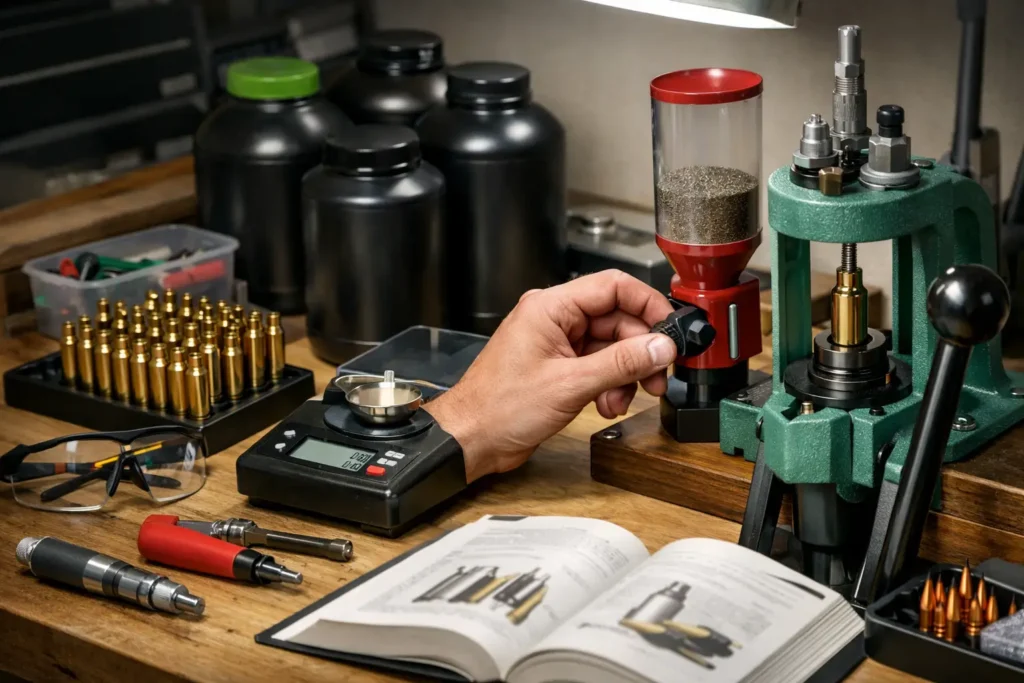
If your .223 load shoots tiny groups at 100 yards but throws vertical stringing once the temperature shifts or the round count climbs, the powder choice is usually part of the story. Finding the best powder for 223 reloading is less about chasing one universal winner and more about matching burn rate, metering, and pressure behavior to the bullet, barrel, and job you actually have.
That matters because .223 Remington is unusually flexible. It can be a light-recoiling varmint round, a practical training cartridge, or a precision load for heavier match bullets. A powder that performs beautifully with 40 to 55 grain bullets in a bolt gun may not be your best answer for 69 to 77 grain bullets in a gas gun. The best results come from understanding where each powder shines and where it asks for compromise.
What makes the best powder for 223 reloading?
Three things tend to separate an average .223 powder from one you keep buying. First is consistency. That includes velocity spread, ignition behavior, and how the load responds across changing temperatures. Second is metering. If you load in volume, a powder that drops accurately through a measure saves time and reduces variation. Third is application fit. The right powder for prairie dogs is not always the right powder for service-rifle style shooting or heavier precision bullets.
In practical terms, most reloaders end up balancing spherical powders against extruded powders. Ball powders often meter better and support efficient high-volume loading. Extruded powders often have an edge in temperature stability and fine-tuned precision, though modern spherical options have narrowed that gap in some applications.
Case fill matters too. In .223, the best-performing loads often sit in a useful middle ground where the powder burns efficiently without creating awkward compression before you reach your target velocity window. When a powder is too fast, you may hit pressure limits before getting the performance you want with heavier bullets. When it is too slow, you may leave velocity on the table or get less efficient burn in shorter barrels.
Best powder for 223 reloading by bullet weight
The fastest way to narrow the field is by bullet weight.
40 to 55 grain bullets
For lighter varmint and general-purpose bullets, H335 remains one of the classic choices for a reason. It meters exceptionally well, supports good velocity, and has a long track record in .223. Winchester 748 also stays in the conversation for similar reasons. Both are practical powders when you want reliable charge throws and efficient loading sessions.
Ramshot TAC deserves serious attention here as well. It is versatile across a broader bullet-weight range than some shooters expect, and many reloaders find it delivers an attractive mix of accuracy, velocity, and clean metering. For 50 to 55 grain bullets in particular, TAC is often one of the easiest powders to make work well in both bolt guns and semi-autos.
If your priority is pure accuracy over loading speed, IMR 8208 XBR and Vihtavuori N133 are both strong performers with lighter bullets. They may not meter like fine spherical powder, but they have earned respect for predictable behavior and excellent precision potential.
60 to 69 grain bullets
This is where the .223 becomes more demanding and more interesting. TAC continues to be a strong all-around option. Hodgdon CFE 223 is also worth considering if you are looking for velocity and smooth metering, especially in rifles that respond well to its pressure curve.
Accurate 2460 and Shooters World powders in the appropriate burn range can fit this middle-weight class well too, especially for shooters building practical match or training ammunition in quantity. The exact winner often depends on your chamber, throat, and barrel length. In this range, there is rarely one magic answer. There are usually two or three powders that all perform well, with one edging ahead in your rifle.
69 to 77 grain bullets
Heavier match bullets usually reward powders with the right balance of burn speed and stability. Reloder 15 has a strong reputation in this class, especially for accuracy-focused loads. Varget is another established favorite where available, particularly for shooters who value temperature stability and dependable performance across seasons.
IMR 8208 XBR continues to show up here for good reason. It has a reputation for consistency and often handles heavier .223 bullets very well without becoming finicky. Vihtavuori N140 also belongs in the discussion for reloaders who want premium-level consistency and are willing to pay for it.
The trade-off with some of these extruded powders is simple: they may deliver superb results, but they can slow down production compared to easy-metering ball powders. If you are loading a few hundred precision rounds, that may not matter. If you are loading thousands, it probably will.
Powder shape, metering, and real loading efficiency
A lot of .223 shooters say they want the best powder, but what they really need is the best powder they can load consistently at the volume they shoot. That is why H335, TAC, W748, and CFE 223 stay so popular. They meter well, which reduces charge variation from one throw to the next and makes progressive or high-volume loading more efficient.
Extruded powders can still be the right call when accuracy is the top priority, especially with heavier bullets. But there is a reason many experienced reloaders keep both types on the bench. One powder handles bulk 55 grain range loads. Another handles the 75 or 77 grain load reserved for matches or distance work. That is not indecision. It is good load planning.
Temperature stability and seasonal performance
Not every .223 powder behaves the same when conditions change. If you work up loads in mild spring weather and then shoot in summer heat or winter cold, your results can shift. Powders known for stable performance across temperature swings often earn long-term loyalty because they reduce surprises.
This is one area where powders like Varget and IMR 8208 XBR tend to attract experienced reloaders. They are often chosen not just for group size, but for predictability. That does not mean ball powders cannot perform well in changing conditions. It means the margin for surprise can be different, and that matters if your load is already near the upper end.
For practical field use, stable performance can matter more than an extra small gain in velocity. A load that stays consistent from one month to the next is easier to trust.
Semi-auto vs bolt gun considerations
The best powder for 223 reloading can also depend on the rifle action. In bolt guns, you may have more freedom to tune around seating depth, longer cartridges where appropriate, and single-rifle precision goals. In AR-platform rifles, reliability, gas system behavior, and magazine-length constraints matter more.
That changes powder choice. A powder that gives excellent accuracy in a bolt gun may still be less attractive in a gas gun if it creates less desirable cycling behavior or does not deliver the same consistency at magazine length. TAC, H335, and CFE 223 often remain popular in semi-autos because they balance performance with practical loading efficiency and dependable function.
For heavier bullets in AR rifles, many loaders still lean toward 8208 XBR, Reloder 15, or Varget-type performance when they want more refined results. The right answer depends on whether the rifle is built for speed, training volume, or match-grade precision.
A few proven powder choices worth shortlisting
If you want a practical shortlist instead of a giant catalog, these are the names most .223 reloaders should evaluate first: H335 for classic 55 grain performance, Ramshot TAC for broad versatility, CFE 223 for metering and velocity, IMR 8208 XBR for consistency across bullet weights, and Varget or Reloder 15 for heavier precision-focused loads.
That does not make the others second-rate. Winchester 748, Accurate 2460, Vihtavuori N133, and N140 all have legitimate strengths. It simply means those first five tend to cover the widest range of real-world .223 needs with proven results.
If supply is inconsistent, buy by burn-rate role rather than by brand loyalty alone. A dependable alternative in the same performance window is usually more useful than waiting indefinitely for one exact label.
How to choose without wasting time and components
Start with your bullet weight and rifle type. Then decide whether your priority is volume, precision, or a balance of both. From there, pick two powders, not six. One should be a proven easy-metering option, and the other should be a known accuracy-focused option if precision matters in your setup.
Work from published data, watch pressure carefully, and test for more than group size. Chronograph results, temperature behavior, and function in your specific rifle tell the full story. The best load is not just accurate on a calm day. It repeats, feeds, and holds together over time.
For serious reloaders, component availability also matters. A powder you can source consistently is often more valuable than one that is theoretically perfect but rarely in stock. That is part of why specialist suppliers like Lee Reloading Canada matter to dedicated handloaders who want trusted powder lines without guesswork.
The .223 rewards careful powder selection more than most people realize. Pick a powder that fits your bullet, your rifle, and your pace of loading, and the cartridge gets very easy to live with. Power and precision in every load starts there.