
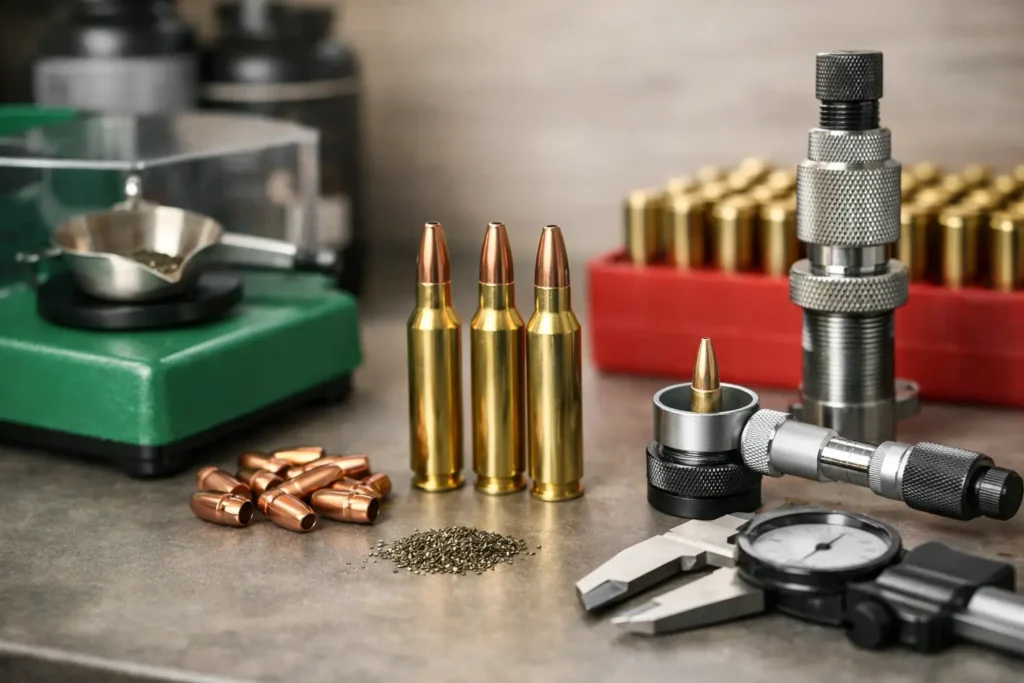
One load prints a tight cluster. The next opens up for no obvious reason. Same charge weight, same seating depth, same rifle, same day. In many cases, the missing variable is precision handloading component consistency. When components vary more than the load data assumes, your process can be disciplined and still produce uneven velocity, shifting point of impact, or pressure behavior that is harder to predict.
For experienced reloaders, this is where good practice stops being about simply assembling safe ammunition and starts becoming a control problem. The tighter you want your results, the more every input matters. Primer output, powder lot behavior, brass capacity, bullet dimensions, and even neck tension all stack together. The art of reloading, perfected, is rarely about one magic adjustment. It is usually about reducing variation everywhere you can.
Why precision handloading component consistency matters
At a practical level, consistency is what turns a recipe into repeatable performance. A load that shows low extreme spread in one batch can drift in the next if a primer runs hotter, a new powder lot meters slightly differently, or a different brass lot changes internal case volume. The target only shows the final result, but the cause is often upstream at the component level.
This matters even more as you push for tighter standards. A hunting load may tolerate a bit more variation and still perform well in the field. A precision rifle load intended for distance work will expose every small inconsistency much faster. Pistol reloaders see the same principle in a different form. Reliable ignition, every time, depends on matching the right primer characteristics and powder behavior to the cartridge, firearm, and use case.
There is also a safety component that serious reloaders already understand. Consistency is not only about group size or chronograph numbers. It helps keep pressure behavior predictable. When several small variables drift in the same direction at once, the margin you thought you had can narrow quickly.
The components that move the needle most
Primers set the tone for ignition
Primers are easy to underestimate because they are small, standardized, and often treated as interchangeable within a category. They are not. Different brands and lines can vary in brisance, cup hardness, and ignition characteristics. Even within the correct class – small rifle, large rifle, magnum, pistol, or shotshell – changing primer type can alter velocity, pressure, and consistency.
If you are working with ball powders, magnum charges, or cold-weather applications, primer selection can have an outsized effect. Some combinations benefit from a stronger, more decisive ignition event. Others perform better with a milder primer that avoids unnecessary pressure spikes. It depends on the cartridge, powder type, and the operating window of the load.
This is one reason experienced reloaders buy with intention rather than by label alone. If you develop a load around a specific primer, keeping that component stable from batch to batch removes a major source of variation.
Powder consistency is where velocity lives
Powder choice shapes the entire load, but powder consistency is what keeps that load honest over time. Burn rate, granule shape, temperature behavior, and lot-to-lot variation all matter. Stick powders may offer excellent precision in some rifle applications, while spherical powders often meter more uniformly in high-volume setups. Neither is automatically better. The right answer depends on the cartridge and your process.
Lot changes deserve respect. Even premium powder lines can show enough variation between lots to justify rechecking charge weight, velocity, and pressure signs. That does not mean powder is unreliable. It means disciplined handloading accounts for normal manufacturing tolerance rather than assuming every container is identical.
For reloaders who care about repeatable results, the best habit is simple: when you open a new lot, step back and confirm performance before loading deep into quantity. Power and precision in every load comes from verification, not assumption.
Brass carries more variation than many reloaders expect
Cases do more than hold the load together. Brass affects internal volume, neck tension, primer pocket condition, and overall cartridge alignment. Mixed brass is the obvious variable, but even same-headstamp brass can vary by lot, production date, and number of firings.
In precision work, case capacity differences show up in pressure and velocity. Neck wall variation can affect bullet release. Primer pockets loosen over time, and flash holes are not always perfectly uniform. None of this is news to serious reloaders, but it is worth saying plainly: if your brass prep is inconsistent, your finished ammunition will be too.
That does not mean every shooter needs to chase benchrest-level case prep. A practical hunting load may perform extremely well with sorted, trimmed, and sensibly maintained brass. But if you are trying to shrink vertical spread at distance, brass uniformity is often where the next improvement is hiding.
Bullets finish the job
Bullet weight consistency, base uniformity, jacket concentricity, and ogive variation all influence performance. For short-range plinking ammunition, small differences may not matter much. For precision applications, they often do.
What matters most is matching your standard to your purpose. If the rifle and shooter are capable of exposing tiny differences, component quality at the bullet level becomes much more visible. If the intended use is practical field accuracy, the goal is still consistency, just with a more realistic threshold.
Building a process around component consistency
Precision handloading component consistency in practice
The best reloaders do not just buy better components. They create a process that protects the consistency of those components from the bench to the range.
Start by narrowing variables. Keep primers, powder lot, brass brand and lot, and bullet type stable during load development. If something changes, document it and retest. This sounds basic because it is, but it is also where many unexplained performance changes begin.
Storage matters more than many people admit. Primers and powders should be kept in stable, appropriate conditions and handled according to manufacturer guidance. Moisture, temperature swings, contamination, and careless bench habits can turn a good component into a questionable one. Consistency begins long before seating a bullet.
Measurement discipline matters too. Uniform charge weights, repeatable seating depth, and controlled case prep are what allow you to see what the components are actually doing. If your process is loose, you cannot tell whether the issue is the primer, the powder, the brass, or your technique.
Chronograph data is valuable here, but only if you read it in context. A low standard deviation is useful, not sacred. If a load shoots exceptionally well in the real world, the chronograph should inform your judgment, not replace it. On the other hand, if accuracy is inconsistent and velocity spread is wide, component variation is one of the first places to look.
When to chase more consistency and when to stop
There is a point where tighter sorting produces smaller returns. That threshold changes based on the cartridge, firearm, distance, and intended use. A varmint shooter loading in volume may prioritize dependable ignition and clean metering over obsessive brass sorting. A long-range competitor may care deeply about lot control, neck tension uniformity, and exact seating pressure.
The trade-off is time, cost, and component availability. Premium components and careful sorting often produce better results, but not every application demands the same level of refinement. The smart approach is to invest where the performance gain is real.
This is also where supply matters. When a preferred primer or powder is available, many reloaders buy enough of the same lot to support a proven load through a full season or project cycle. That is not hoarding for its own sake. It is one of the simplest ways to protect consistency once a load is working.
For shooters buying online, trusted inventory matters because substitution is rarely neutral in precision handloading. A serious component supplier understands that a large rifle primer is not just a large rifle primer, and that changing a powder line or primer class can reset the work you have already done.
Consistency is not glamorous, but it is what separates a load that merely functions from one that performs with confidence. If you want fewer surprises on the target, across the chronograph, or in the field, start by tightening the variables you can actually control. Better components help, but disciplined selection and repeatable process are what turn them into results.
