
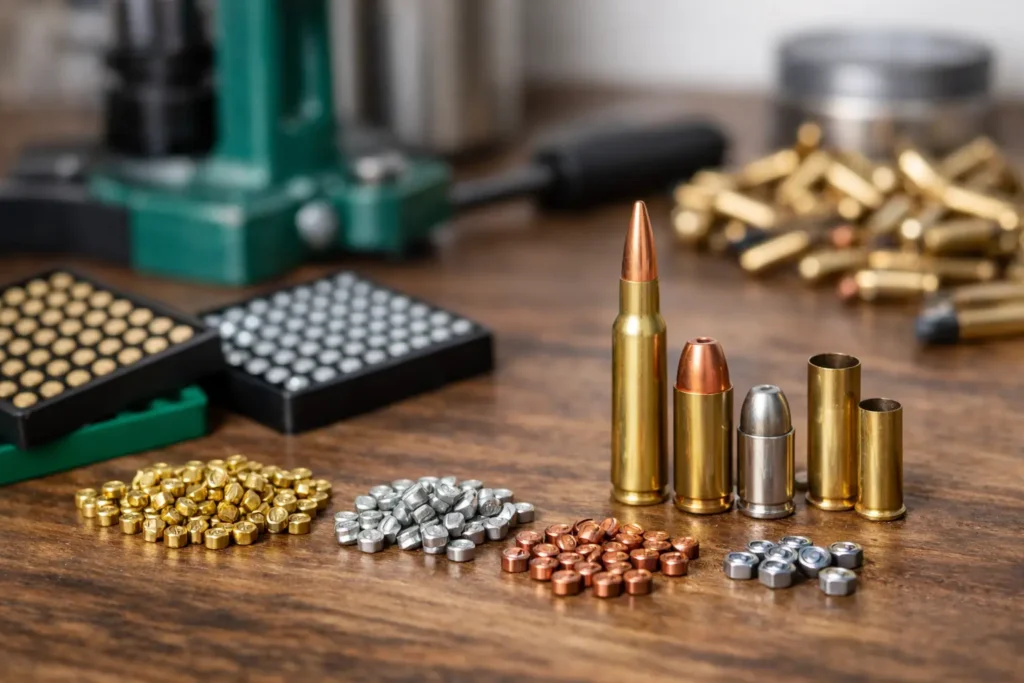
You can ruin a good load with the wrong primer long before powder charge or bullet choice becomes the problem. If you’re asking what primers do I need, the real question is which primer matches your cartridge, your powder, and the pressure characteristics of your firearm. Reliable ignition, every time, starts with getting that match right.
For experienced reloaders, primer selection is less about guesswork and more about fit. Primer size has to match the case. Primer type has to match the cartridge family. Cup thickness and ignition intensity have to make sense for the load. Once you look at it that way, the decision gets a lot simpler.
What primers do I need? Start with the cartridge
The first filter is always the cartridge itself. In most cases, the brass tells you what primer pocket it was built for, and that determines whether you need small pistol, large pistol, small rifle, large rifle, shotshell, or 50 BMG primers.
A 9mm Luger case takes a small pistol primer. A .45 ACP case usually takes a large pistol primer, although some brass is made with small pistol primer pockets, which is why sorting mixed brass matters. A .223 Remington takes a small rifle primer. A .308 Winchester typically takes a large rifle primer. If the case is built for one size, there is no substituting another size to make components fit.
That sounds obvious, but mistakes still happen when reloaders work through mixed range brass or move between standard and specialty cases. Some cartridges also blur the line. The .454 Casull uses small rifle primers rather than pistol primers because of pressure demands. Several modern pistol and rifle cartridges can have brass variations depending on manufacturer. The case always decides primer size first.
Primer classes and where they belong
Small pistol primers
Small pistol primers are used in common handgun cartridges such as 9mm, .38 Special, .357 Magnum, .380 ACP, and many others. They are built around handgun pressure and firing pin energy, with cup characteristics suited to pistol applications.
For most standard-pressure handgun loads, this is the right place to start. If you’re loading common target or defensive practice ammunition, standard small pistol primers are usually the baseline component listed in published data.
Large pistol primers
Large pistol primers are common in cartridges such as .45 ACP, .44 Special, .44 Magnum, and .45 Colt. Like small pistol primers, they are intended for handgun use, but they fit larger primer pockets.
The key point is simple – large pistol and small pistol are not interchangeable, even if the cartridge looks close in purpose. Primer pocket dimensions decide that.
Small rifle primers
Small rifle primers are standard for cartridges like .223 Remington, 5.56 NATO, .204 Ruger, and many other small-capacity rifle rounds. They are generally built with harder cups than pistol primers because rifle firing systems and chamber pressures demand it.
This is why using pistol primers in rifle cartridges is not a shortcut. Even if dimensions appear similar in some cases, the pressure environment is different, and the wrong cup strength can create serious safety issues.
Large rifle primers
Large rifle primers are used in cartridges such as .308 Winchester, .30-06 Springfield, 6.5 Creedmoor in large-primer brass, and many traditional big-game and precision rifle rounds. They deliver the ignition profile expected for larger rifle cases and common rifle powders.
With large rifle loads, primer choice can noticeably affect velocity spread, pressure signs, and cold-weather performance. That’s especially true when you move from extruded powders to harder-to-ignite spherical powders.
Magnum primers, shotshell primers, and 50 BMG
Magnum primers exist in pistol and rifle classes. They are designed to provide a hotter or longer ignition impulse, often useful with larger powder charges, slower-burning powders, or difficult environmental conditions. They are not automatically an upgrade. In some loads they help, and in others they can raise pressure or reduce consistency.
Shotshell primers are a separate category and should be treated that way. Shotshell loading data is highly recipe-specific, and changing the primer can alter pressure significantly even if every other component stays the same.
For 50 BMG, use 50 BMG primers only. This is its own class with its own specifications.
Standard vs magnum – the part that actually matters
A lot of reloaders really mean this when they ask what primers do I need: standard or magnum?
The answer depends on powder type, case volume, temperature, and load data. Magnum primers are commonly used with slower powders, larger cases, and loads that need more flame to establish consistent ignition. They can also make sense for hunting ammunition exposed to severe cold.
But hotter is not always better. In a moderate load with an easy-to-ignite powder, a magnum primer can produce more pressure than expected and sometimes worse accuracy. Some precision shooters deliberately choose standard primers because they want the least disruptive ignition that still gives complete, repeatable burn.
If your published data specifies a magnum primer, use one. If it specifies a standard primer, don’t assume a magnum version is equivalent. Any primer change should be treated as a component change, with the load worked up again carefully.
Rifle vs pistol primers – same size does not mean same job
This is one of the most important distinctions in primer selection. Some small pistol and small rifle primers share similar external dimensions. The same goes for certain large pistol and large rifle families in principle, though the pocket dimensions themselves differ by class. What matters is that primers are engineered for different pressure windows, cup hardness, and ignition behavior.
Rifle primers typically have harder cups to handle higher chamber pressure and to reduce the chance of primer flow or piercing. Pistol primers are tuned for pistol firing systems and different pressure conditions. Swapping between them because they “fit” is not a sound practice.
There is also a function issue. A striker-fired pistol may not reliably ignite a primer with a harder cup. On the rifle side, a softer primer may be a poor choice in a semi-auto platform with a free-floating firing pin. Reliability and safety both matter here.
Brand differences are real
Not all primers behave exactly the same, even within the same class. Experienced reloaders know that changing from one trusted brand to another can shift velocity, pressure signs, and group size. Some primers are known for a hotter flame. Some are prized for consistency in match applications. Some have harder cups that semi-auto rifle shooters prefer.
That doesn’t make one brand universally better. It means primer selection is part of the load recipe. If you change brands, back off and confirm performance again. That matters even more when you’re running near the top end of published data or building precision loads where small changes show up on target.
For buyers sourcing hard-to-find components, availability can force substitutions. That’s workable, but only if you treat the substitution seriously.
What primers do I need for semi-autos, revolvers, and bolt guns?
Firearm type matters more than many people admit. Semi-auto rifles often benefit from primers with harder cups, particularly in platforms where slamfire risk is part of the conversation. That’s one reason certain small rifle primers are popular for 5.56 and .308 gas guns.
Bolt-action rifles give you more flexibility, especially when you’re tuning for precision. In that setting, consistency may matter more than cup hardness as long as the primer suits the pressure level.
For handguns, reliable ignition comes first. A revolver or hammer-fired pistol may tolerate a wider range of primers than a lighter striker-fired gun. If your pistol has a reduced-power spring setup, primer sensitivity becomes part of the equation quickly.
The practical way to choose
Start with the manual. Use the primer class listed for your exact cartridge and load data. Then confirm your brass primer pocket size, especially if you’re working with mixed cases. After that, look at the powder type, the firearm, and the operating conditions.
If you’re loading standard handgun ammo, standard pistol primers are usually the correct answer. If you’re loading rifle ammunition with ball powder, magnum or harder-cup rifle primers may be appropriate depending on the data and platform. If you’re loading for precision, you may end up testing a few approved options to see what your rifle actually prefers.
This is also where buying from a specialized source matters. A focused reloading retailer such as Lee Reloading Canada makes it easier to compare primer classes, stay with trusted brands, and find the exact component instead of settling for a close-enough substitute.
The best primer is not the hottest one or the one someone else had on the shelf last month. It’s the one that matches your cartridge, your data, and your firearm with no guesswork. When the load is built on that kind of discipline, accuracy follows.
