
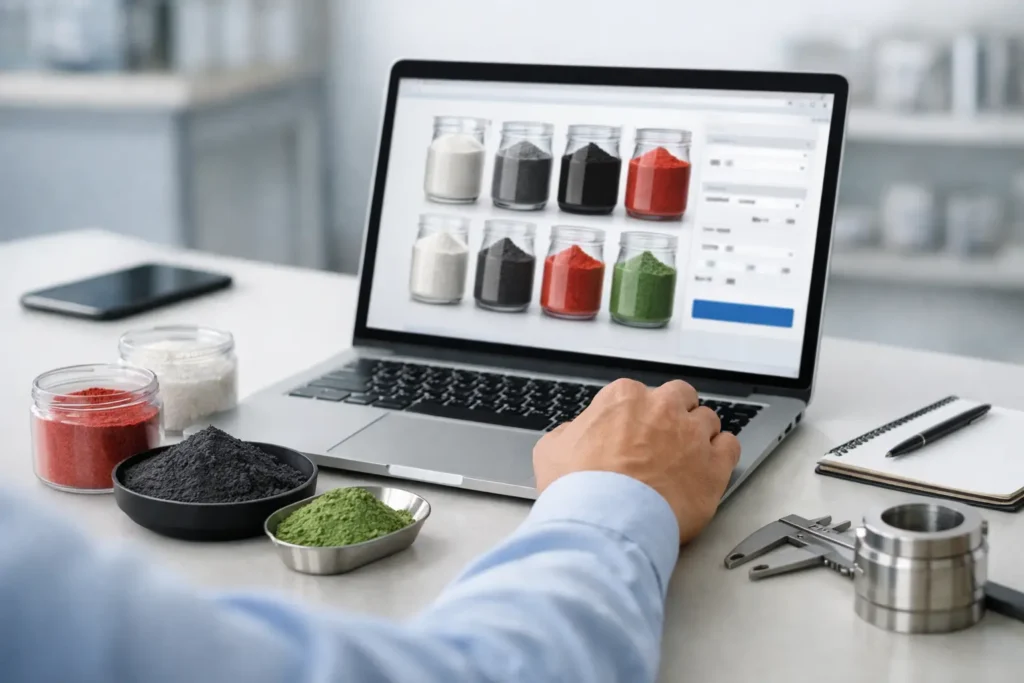
When a reloader searches for powder online, the goal is not to browse for inspiration. The goal is to find the exact product, confirm it is actually available, place the order without friction, and move on with confidence. That is what defines a strong online powder ordering experience – not flashy design, not oversized claims, but accurate inventory, product clarity, and a buying process built around precision components.
For experienced shooters and reloaders, powder is not a casual purchase. Burn rate, application, lot consistency, and brand trust all matter. If a site makes you guess whether a product is in stock, hides key details, or slows checkout with a confusing process, it creates doubt where there should be none. In this category, doubt costs time, load development momentum, and sometimes a missed range session or hunt.
Why the online powder ordering experience matters
Smokeless powder sits in a different class than general shooting accessories. Buyers are usually looking for a specific line, a known brand, and a known use case. Maybe it is an IMR powder that has already proven itself in a preferred rifle load. Maybe it is Hodgdon or Winchester for a handgun setup that needs reliable metering and repeatable performance. Maybe it is Vihtavuori for a precision application where consistency is part of the value proposition.
That means the online store has one job above all else – reduce uncertainty. A good retailer helps the buyer verify fit, availability, and order status quickly. A poor one adds friction at every step. This is where the online powder ordering experience stops being a marketing phrase and becomes an operational standard.
The strongest sites understand that reloading customers are often making narrow decisions, not broad ones. They are not asking, “What powder should I try someday?” They are asking, “Do you have this exact product, and can I get it shipped without problems?” That difference should shape the entire buying flow.
The signals of a strong online powder ordering experience
The first signal is real-time stock visibility. If powder is listed but not truly available, the site is wasting the buyer’s time. Reloaders are often searching across multiple retailers because supply can shift fast. Clear in-stock status is not a convenience feature. It is the foundation of trust.
The second signal is product specificity. Powder listings should clearly identify the brand, product family, and container size, without forcing the buyer to decode vague labels. This sounds simple, but it separates specialist retailers from general e-commerce operations. A reloader should not have to click through layers of generic copy to confirm whether a listing is the exact IMR, Hodgdon, Ramshot, Accurate, Alliant, Shooters World, Winchester, or Vihtavuori powder they need.
The third signal is a checkout process that respects the category. Buyers want secure payment options, straightforward order review, and clear instructions. They do not want to wonder whether the store understands the handling and shipping expectations tied to reloading components. Even if the product page is strong, a weak checkout can break confidence fast.
Shipping communication matters just as much. No serious buyer wants a vague promise. They want to know what happens after purchase, how the order is processed, and when it is likely to move. That does not mean every retailer can guarantee the same speed on every order. It means the process should be visible and dependable.
Where many powder retailers lose the sale
The biggest failure is stale inventory. A product page says available, the customer pays, and only later learns the item is backordered or unavailable. In reloading, this is more than annoying. It forces load planning changes and can stall an entire batch build.
Another common problem is weak category structure. If powder and primers are buried under broad shooting menus, the site is telling the buyer it was not built for specialists. Serious reloaders think in component classes, not lifestyle categories. Large rifle primers, small pistol primers, magnum variants, and shotshell products are distinct needs. Powder brands and product families should be just as easy to sort.
Then there is the issue of generic copy. Experienced customers do not need filler language. They need clean identification, trusted brand signals, and confidence that the retailer knows what it is selling. Too much soft marketing language can actually work against conversion here, because it suggests the site is speaking to casual traffic instead of informed buyers.
What reloaders actually want from the buying process
Most reloaders will trade visual flair for operational clarity every time. They want fast search, clean navigation, exact product naming, secure checkout, and prompt fulfillment. They also want a retailer that feels specialized. That matters because specialized sellers tend to understand the difference between moving general inventory and serving a component-driven customer base.
This is especially true for hard-to-source items. When primers or powder lines are difficult to find, the pressure on the retailer increases. At that point, the buying experience is not just about convenience. It becomes about credibility. If the site presents clear stock signals, trusted payment methods, and a direct path to order completion, the buyer is far more likely to return.
There is also a practical reason buyers prefer focused retailers. The more concentrated the assortment, the easier it is to compare relevant options. A broad outdoor store may carry shooting products, but that does not mean it is optimized for a reloader who wants to move from search to checkout in minutes. A specialist site usually reflects the actual decision tree of the customer.
Online powder ordering experience and buyer confidence
Confidence comes from consistency. When the same retailer repeatedly shows accurate stock, ships on time, and carries recognized brands, the buyer stops treating each purchase as a gamble. That is when a store becomes part of a regular sourcing routine rather than a one-time backup option.
For online powder ordering experience, confidence is built through dozens of small details. Category pages should make sense to a reloader at a glance. Product pages should confirm exactly what is being purchased. Checkout should feel secure and intentional. Payment options should fit the customer, whether that means conventional digital payment or alternatives that the retailer supports responsibly.
There is a trade-off here. Some sites try to simplify the shopping experience so much that they remove useful detail. Others add so much technical clutter that ordering slows down. The best balance is practical precision. Give the buyer the information needed to confirm the product, then let them complete the order without extra friction.
Why specialized inventory makes the difference
A serious powder retailer earns trust through selection discipline. Carrying known powder brands and clear primer categories tells the customer this is a business built around reloading performance, not a side category. That matters because informed buyers often arrive looking for one exact component, but they may also be planning future purchases around availability.
If they see a store with strong brand coverage and a focused inventory structure, they are more likely to treat it as a long-term source. That is where the buying experience extends beyond one order. It supports repeat purchasing, caliber planning, and confidence in future load work.
Lee Reloading Canada reflects this specialist model well. The focus stays on primers and smokeless powder, the category intent is clear, and the purchase path is built for reloaders who already know what they need. That kind of structure does not just help conversion. It respects the customer’s time.
The standard is simple, even if the category is not
A better online powder ordering experience is not built with gimmicks. It is built with accurate inventory, recognized brands, clean category logic, secure payment, and shipping communication that does not leave the buyer guessing. For a category tied so closely to precision and reliability, anything less feels out of place.
Reloaders already do the hard part at the bench. The retailer’s job is to make sourcing components straightforward, dependable, and worthy of repeat business. When that happens, ordering stops feeling like a search problem and starts feeling like part of a well-run system.
The best stores understand that every order carries more than a price tag. It carries trust, planning, and the expectation that the component arriving at the door is exactly the one the buyer intended to load next.
