
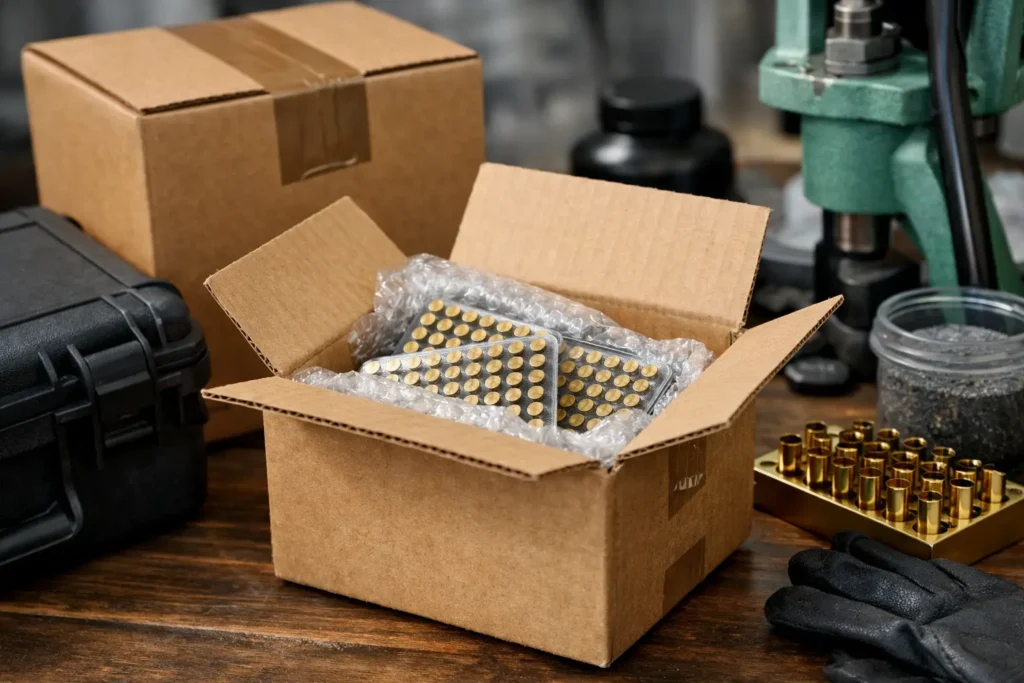
A carton of primers is not just another package on the doorstep. It represents a planned load development session, a match schedule, or the components needed to keep proven hunting ammunition on hand. This secure primer shipping guide explains what serious reloaders should expect from a properly managed order, from checkout through delivery, and what they can do to protect their component supply.
Primers are regulated hazardous components. That reality affects how they are packed, labeled, tendered to carriers, tracked, and received. A reliable shipping process does more than move inventory quickly. It protects product integrity, supports compliance, and gives the buyer a clear record of the order from warehouse to final delivery.
Why Primer Shipping Requires More Control
Reliable ignition begins long before a primer reaches the loading bench. Primers are manufactured and packaged for safe commercial distribution, but they still require controlled handling throughout fulfillment. Shipping rules can differ by carrier, destination, service level, package quantity, and current regulatory requirements. A retailer cannot treat them like ordinary accessories, and a knowledgeable buyer should not expect an ordinary parcel experience.
That extra control can mean a dedicated shipping method, a handling charge, delivery restrictions, or a longer processing window than non-regulated products. These are not signs that an order has gone wrong. They are often the practical cost of moving sensitive reloading components responsibly.
For reloaders, the trade-off is straightforward: a shipment that follows the correct process may not always be the cheapest or fastest available option, but it is far more likely to arrive intact, traceable, and ready for safe storage. When availability is tight, protecting a hard-to-source primer order matters as much as placing it.
A Secure Primer Shipping Guide Starts at Checkout
The strongest shipping process begins with accurate customer information. Enter your legal name, complete street address, current phone number, and email carefully. A missing apartment number, transposed postal code, or outdated phone number can delay a shipment that may have limited rerouting options once it enters the carrier network.
Use an address where an adult can receive the package during the expected delivery window. If you live in a rural area, use the delivery format accepted by the selected carrier and avoid assuming that every service can deliver to a post office box. Carrier coverage and hazardous-material policies vary, so the best address is the one that reduces handoffs and failed delivery attempts.
Order confirmation matters as well. Review the primer type, quantity, and product description before submitting payment. Small rifle, large rifle, small pistol, large pistol, magnum, shotshell, and 50 BMG primers are distinct components with different applications. Shipping security cannot correct an order for the wrong primer class after it has been packed and released.
It also pays to keep your confirmation email and order number until the shipment is received and inspected. These details provide the cleanest reference if you need help with a delivery question, address issue, or product discrepancy.
What Responsible Fulfillment Looks Like
A professional retailer should verify the order before it moves into the fulfillment stream. That includes confirming payment, reviewing address details, checking product availability, and applying the appropriate shipping method for the destination. Real-time inventory helps, but stock status is only one part of a dependable order process. The shipment still needs to be prepared under the applicable transport requirements.
Primers should remain in their original manufacturer packaging. That packaging is designed to keep individual units organized and protected during normal commercial handling. Retailers should not improvise with loose primers, repack components casually, or combine incompatible items simply to reduce carton size.
Outer packaging should protect the manufacturer boxes from crushing, moisture, shifting, and exposure during transit. The carrier must also receive the package through the correct channel, with required documentation and markings handled by the shipper. Specific requirements can change, which is why reputable sellers follow current carrier and regulatory standards rather than relying on shortcuts or outdated advice.
At Lee Reloading Canada, the goal is simple: move trusted components through a controlled ordering process so reloaders can focus on consistent ammunition, not uncertainty around their supply.
Why Tracking Is More Than a Convenience
Tracking gives the customer visibility, but it also creates accountability. Once a regulated component shipment has been accepted by the carrier, tracking events establish a timeline for movement, delays, delivery attempts, and final delivery. Watch for the initial carrier acceptance scan, not only the shipping-label notification. A label means the order is prepared; an acceptance scan confirms it has entered the carrier network.
If tracking stalls briefly, do not assume the package is lost. Some transportation stages produce fewer scans than others, especially during weekends, remote-route transfers, weather disruptions, or high-volume periods. If there is no meaningful movement beyond a reasonable period, contact the retailer with the order number and tracking details. Clear information helps the support team investigate efficiently.
Receiving Primers Without Creating a Weak Link
The final handoff is where a secure shipment can become vulnerable. Do not leave delivery notices unanswered for days, and do not ask neighbors or building staff to accept a package unless you trust the arrangement and it complies with the delivery terms. Plan for receipt when possible, especially if temperatures, precipitation, shared entrances, or package theft are concerns.
When the shipment arrives, inspect the outer carton before opening it. Look for obvious crushing, punctures, water damage, broken seals, or signs that the package has been mishandled. Minor cosmetic wear on an outer box does not automatically mean the contents are compromised, but visible damage should be documented before you discard any packaging.
Open the carton in a dry, uncluttered area away from open flame, sparks, smoking materials, and active reloading equipment. Confirm that the item count and primer type match your order. Keep the primers in their original factory packaging, and move them promptly to your established storage location rather than leaving the carton in a vehicle, garage entryway, or exposed porch.
If the package appears damaged or the contents do not match the order, take clear photos of the carton, shipping label, internal packaging, and affected product. Do not attempt to use visibly compromised components. Contact the retailer promptly with your order number and documentation so the issue can be assessed under the applicable policy and carrier process.
Common Mistakes That Delay or Compromise Orders
Most primer-shipping problems are preventable. The most common issue is an incomplete or inaccurate delivery address. Another is ordering just before a trip, match, or hunting departure without allowing for processing and carrier transit time. Regulated shipments should be ordered with a practical buffer, not on the assumption that every delivery will follow the fastest estimate.
Buyers also create avoidable risk when they request unauthorized rerouting, leave packages unattended, or delay inspection after delivery. A shipment can arrive on time and still become a problem if it sits in harsh weather or is accepted by someone who does not understand what it contains.
Avoid combining a primer purchase with a plan that depends on last-minute substitutions. If your load requires a specific primer, order that specific component and verify the product details. Similar names do not mean interchangeable performance. Primer selection influences ignition characteristics, pressure behavior, and load consistency, so the correct product should be confirmed at checkout and again at receipt.
Plan Orders Around Your Reloading Schedule
The most dependable way to secure primers is to buy with a measured plan. Track what you have on hand, what your established loads require, and how much lead time you need before a match, season, or training cycle. That does not mean overbuying without purpose. It means avoiding the pressure that leads to rushed orders, incorrect selections, or delivery arrangements that are not secure.
For high-volume reloaders, it may make sense to consolidate planned component purchases when inventory is available and shipping terms make sense. For low-volume users, smaller orders may be more practical for budget and storage reasons. The right approach depends on your consumption rate, approved storage capacity, and the specific primer types your load data calls for.
Treat the delivery step with the same discipline you apply at the bench. Verify the order, monitor the tracking, receive it promptly, inspect it carefully, and store it correctly. That final bit of attention protects reliable ignition before the first primer ever reaches a case.