
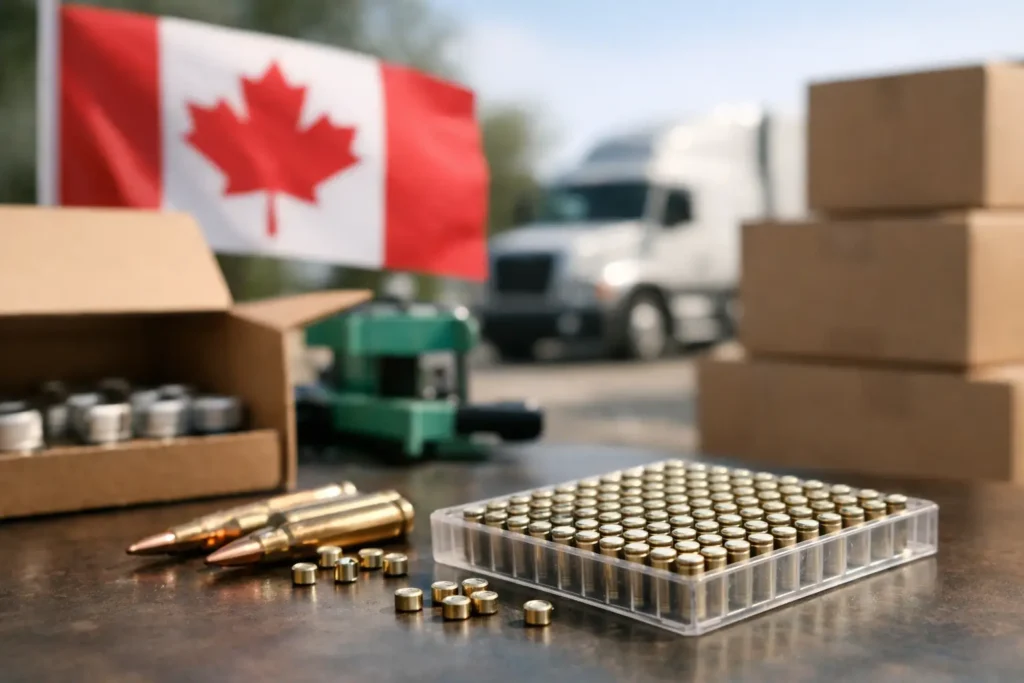
A primer order can be in stock, paid for, and ready to go, yet follow a different path than a die set or a bag of brass. Canadian primer shipping rules require carriers and retailers to handle primers as regulated dangerous goods, which affects the services available, how orders are packed, where they can be delivered, and how quickly they move.
For reloaders, the practical takeaway is simple: order with a little more lead time, use complete delivery information, and treat the shipping method shown at checkout as part of the component purchase. Reliable ignition starts with selecting the correct primer. Reliable delivery starts with understanding the conditions behind that shipment.
Why Primers Ship Differently
Primers are not ordinary consumer goods. Their ignition-sensitive nature puts them under dangerous-goods transportation requirements, even when they are packed in the original manufacturer trays and sleeves. Those requirements are designed to protect the public, carrier personnel, and every stop between a fulfillment facility and the final delivery address.
That means a retailer cannot simply place primers in a standard parcel and send them through every available shipping service. The shipment must use approved packaging, documentation, handling procedures, and carrier services appropriate to the product and destination. Availability can also vary by region, service lane, weather conditions, and carrier operating policies.
This is why a primer shipment may carry a dedicated hazardous-materials charge, offer fewer delivery options, or take longer than a typical e-commerce order. Those restrictions are not a sign that an order is being handled poorly. They are part of the controlled process that allows primers to move legally and safely across Canada.
Canadian Primer Shipping Rules at Checkout
The checkout experience is where most shipping limitations become visible. A retailer’s system may evaluate the item class, order quantity, postal code, and selected service before confirming which delivery options can be used. A product may be available for purchase but not eligible for every shipping method or every address.
Carrier Acceptance and Service Levels
Not every carrier accepts regulated dangerous goods, and carriers that do may limit the services they provide. Expedited shipping is not always available for primers. Some routes may require ground transportation, while others may have restricted service schedules or destination-specific acceptance rules.
For that reason, estimated delivery times for primer orders should be treated as estimates, not guarantees. A shipment can move promptly after it leaves the warehouse while still taking longer than a standard parcel because it is traveling through a more controlled carrier network.
Packaging and Quantity Limits
Primer shipments must be packed to the applicable transportation standard. Original packaging matters because it is designed to keep individual primers separated and protected during normal handling. Retailers may also use specialized outer packaging, markings, and shipment preparation procedures.
Quantity can affect what is permitted, how the order is packed, and which carrier service is available. Larger orders are often more efficient from a component-planning perspective, but they may involve different handling requirements than a small order. The best approach is to build an order around your actual loading schedule rather than assuming every quantity will ship under identical terms.
Address and Destination Restrictions
A complete, accurate street address is essential. Some shipments may not be eligible for delivery to certain postal boxes, remote routes, or locations served by limited carrier infrastructure. Rural delivery can be available, but the service method and transit time may differ from those for a major urban center.
If a destination has special access conditions, an apartment unit requirement, a gate code, or limited receiving hours, provide that information when the ordering process allows it. A failed delivery attempt can create more complications for a regulated shipment than it would for a box of ordinary accessories.
Shipping Charges and Transit Time
Dangerous-goods shipping can carry costs beyond standard parcel freight. These charges support compliant handling, approved transportation, and carrier processing. They are not simply a premium for faster delivery. In fact, a shipment with a regulated-goods charge may still require a ground service and a longer transit window.
This is one area where comparing only the product price can be misleading. A dependable order is the right primer type, shipped through an approved service, to an address that can receive it without delay. For serious reloaders, that reliability is worth factoring into the purchase decision.
What Reloaders Should Do Before Ordering Primers
Start with the component itself. Confirm the primer class your load data calls for, whether that is small rifle, large rifle, small pistol, large pistol, magnum, shotshell, or 50 BMG. Primer substitutions are not casual changes. Cup characteristics, brisance, and ignition behavior can influence pressure, velocity consistency, and performance. Use published load data and make changes only within safe, documented practices.
Then confirm the shipping details before you finalize the order. Use the full physical delivery address, check that the postal code is correct, and choose the available service presented for the order. If the checkout system limits an option, that limitation is usually tied to carrier acceptance or the destination, not inventory availability.
Plan the purchase around your bench time rather than waiting until the last tray is empty. A primer shortage at the loading bench can halt a match load development session, a hunting-season practice schedule, or a high-volume training run. Keeping a sensible supply of the primer you actually use is more useful than stocking a collection of near-matches that do not align with your established data.
Plan Primer Orders Around Your Loading Calendar
Primer shipping works best when it is planned, not rushed. If you are preparing ammunition for an upcoming match, a rifle zero confirmation, or a hunting trip, give the order enough time for order processing, carrier acceptance, transit, and any weather or regional service disruptions.
Consolidating planned component purchases can sometimes make practical sense, but it depends on the items in the cart and the shipping rules that apply to each one. Primers and smokeless powder can each have specialized shipping requirements. Adding other products to the same order does not automatically make shipment faster or less regulated. Let the final shipping options and charges guide the decision.
For high-volume reloaders, consistency matters as much as availability. When you find a primer that performs well with your chosen powder, projectile, case preparation, and firearm, maintaining a reasonable supply can reduce unnecessary load redevelopment. That is particularly valuable for precision rifle shooters working to preserve established velocity data and for handgun shooters who depend on dependable cycling and ignition over extended practice sessions.
Receiving a Primer Shipment
Be ready to receive the shipment at the delivery address. If signature, age verification, or other delivery controls are required by the carrier or service selected, follow those instructions. Do not assume a regulated package can be redirected, left unattended, or handled like a standard accessory delivery.
Once received, inspect the outer package before putting it away. If there is visible damage, moisture exposure, crushed packaging, or any concern about the condition of the shipment, do not treat it as a normal return or casually open compromised packaging. Keep it secure, avoid unnecessary handling, and contact the seller or carrier for direction.
Store primers according to manufacturer guidance and applicable local requirements. Keep them in their original packaging, away from heat, open flame, impact risks, and unauthorized access. Shipping compliance ends at delivery, but safe handling remains part of every reloader’s responsibility.
The Practical Standard: Accurate Orders, Realistic Timing
The most common frustration with primer shipping comes from expecting it to behave like ordinary parcel delivery. It is not. Carrier restrictions, compliant packaging, destination limits, and dangerous-goods processing are part of the transaction from the moment an order is placed.
A retailer that applies those controls is protecting the supply chain that keeps quality components available to Canadian reloaders. Confirm the primer you need, enter a delivery address the carrier can serve, allow realistic transit time, and keep your loading schedule ahead of your inventory. That is the disciplined approach behind reliable ignition, every time.