
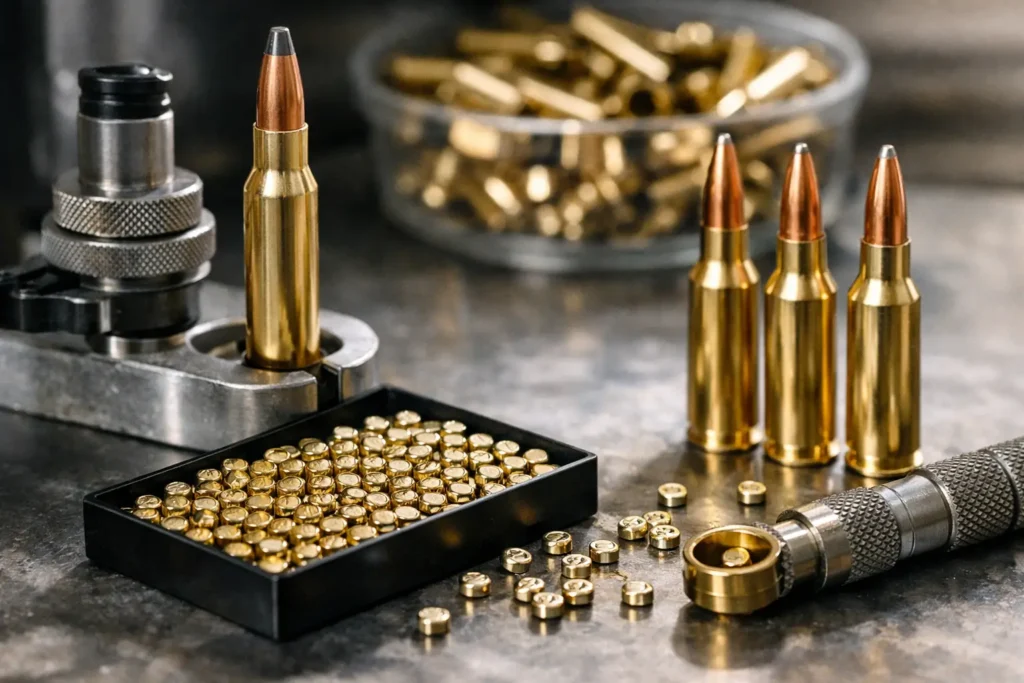
A load can look perfect on the bench and still disappoint at distance when ignition varies from round to round. Precision reloads with consistent primers begin with a simple standard: treat the primer as a performance component, not a small interchangeable part. Its job is to initiate the powder charge the same way, every time, under the conditions your rifle or handgun will actually face.
For precision shooters, hunters, and serious high-volume reloaders, primer consistency supports the results that matter most: predictable velocity, dependable function, and confidence when the shot counts. It does not replace sound load development, proper case preparation, or verified published data. It does provide the stable starting point those other variables need.
Why Primer Consistency Matters in Precision Reloads
A primer produces the initial flame that starts the powder burn. That ignition event influences how the powder charge begins to burn, particularly in cartridges loaded near the edge of a powder’s easy-to-ignite range, in cold conditions, or with larger case capacities. When ignition is uniform, velocity variation is generally easier to control. When it is not, a carefully selected bullet, powder, and case combination can lose some of its potential.
The effect is not identical in every cartridge. A mild small rifle primer may perform exceptionally in one established load while a magnum primer is a better match for another case, powder, or seasonal use. Large-capacity rifle cartridges, dense spherical powders, and cold-weather hunting ammunition can place different demands on ignition than a moderate target load using an easily ignited extruded powder.
That is why primer selection should never be based on availability alone. Availability matters, especially when components are difficult to source, but the correct primer is the one supported by current published load data for the cartridge and powder combination in use. Changing primer type, brand, or lot is a meaningful component change, not a cosmetic substitution.
Match the Primer to the Cartridge and Load Data
Start with the primer class specified in your reliable loading data: small rifle, large rifle, small pistol, large pistol, shotshell, or a specialized option such as 50 BMG. Within those classes, standard and magnum versions are not automatically interchangeable. Magnum primers are designed to deliver a more energetic ignition event, but more energy is not inherently more accurate or safer.
A primer change can alter pressure, velocity, and group performance. In some loads the change may be modest. In others, especially near published maximum limits, it may be substantial enough to require the load to be worked up again according to the manual. The same caution applies when moving between primer brands. Cup construction, sensitivity, brisance, and dimensional characteristics differ by manufacturer.
For a precision rifle load, it is often wiser to choose one appropriate primer and develop around it than to chase a theoretical best option without a disciplined comparison. Use the same firearm, brass preparation standard, bullet, powder lot where possible, and documented test conditions. Evaluate the complete system instead of assigning every result to the primer alone.
Standard vs. Magnum Is a Load Decision
Magnum primers have a clear role, but they should be selected because the data and application call for them. They can be appropriate for certain magnum cartridges, larger powder charges, difficult-to-ignite powder types, and ammunition expected to perform in low temperatures. They are not a universal upgrade for tighter groups.
A standard primer can be the better fit when the selected powder ignites readily and the load has already proven stable. The answer depends on the cartridge, powder, operating conditions, and tested data. Reliable ignition every time is the goal, not the hottest possible primer flame.
Control the Variables That Affect Primer Performance
Consistency is built long before the trigger breaks. Primers should be kept in their original packaging until needed, protected from moisture, direct heat, oils, solvents, and unnecessary handling. Original packaging also preserves lot identification, which becomes valuable whenever you evaluate a load or reorder components.
Keep your loading area clean and deliberate. Contamination from oils or cleaning chemicals can compromise sensitive components. Cases should be properly prepared and inspected, with primer pockets in sound condition and free of debris. If brass has loose pockets, damage, or an uncertain history, it does not belong in ammunition intended for repeatable performance.
Use equipment in good condition and follow the operating instructions for the press, priming tool, and component manufacturer. The objective is uniform, correct primer installation without crushing, deformation, or irregular seating. If a primer does not install normally, stop and identify the cause rather than forcing the operation. A questionable case, pocket, or component is cheaper to replace than it is to troubleshoot after it becomes a loaded round.
Primer handling also deserves the same attention given to powder charges. Keep only the components required for the current loading session on the bench. Return unused primers to clearly identified original packaging at the end of the session. This reduces the risk of mixing types and keeps lot records accurate.
Lot Tracking Turns Good Results Into Repeatable Results
Experienced reloaders often discover a load that produces excellent groups, low velocity spread, and dependable field performance, then struggle to reproduce it months later. Lot tracking is how you keep that success from becoming a memory.
Record the primer manufacturer, product designation, and lot number alongside the powder lot, brass make and number of firings, bullet, cartridge overall length as applicable, and firearm used. Add the date, weather conditions, and chronograph results when available. The record does not need to be complicated. It needs to be complete enough that you can identify what changed when results change.
When a new primer lot is introduced, treat it with respect. Confirm performance with published data and a careful test process before loading a large batch. This is especially relevant for match ammunition, hunting loads intended for extreme temperatures, and any load that previously showed pressure-sensitive behavior.
For shooters building ammunition in volume, lot discipline also improves inventory planning. Buying enough of a proven primer lot for a defined season, match schedule, or load-development project can reduce variables. That approach is often more useful than constantly changing components simply because a different option appeared in stock.
Test for Results, Not Assumptions
Primer choice is easy to overstate. A premium primer cannot compensate for inconsistent brass capacity, irregular powder charges, poor neck tension control, an unsuitable bullet, or a rifle that simply does not favor the load. Conversely, a well-matched primer can make a stable loading process more predictable across a long string of ammunition.
Test changes one at a time. If you change the primer, do not also change the powder charge, bullet lot, seating specification, and brass brand. Shoot enough rounds to see a pattern rather than reacting to one unusually good or poor group. A chronograph can help reveal velocity consistency, but target performance and dependable function still matter. The best load is not always the one with the lowest single velocity statistic. It is the load that performs safely and predictably for its intended use.
For hunters, test in conditions that resemble the field when practical. For competitors, confirm the load over the round counts and distances that matter in your discipline. For handgun and high-volume shooters, reliable cycling and uniform feel may be as significant as small differences on a chronograph screen.
Build Your Supply Around Proven Components
A dependable reloading supply is part of precision. Once you have established a safe, accurate load using recognized components, maintaining access to that primer type helps protect your process from unnecessary substitutions. Lee Reloading Canada focuses on the primer classes and trusted powder brands serious reloaders seek when repeatable performance is the standard.
Buy components with a plan, store them correctly, and keep your records with the ammunition they produced. Do not load beyond verified published data, and do not assume a primer substitution is harmless simply because the cartridge designation is the same.
The smallest component on the bench can have an outsized role in the final result. Give primer selection, handling, and lot control the same discipline you give every other part of the load, and your ammunition will be better positioned to deliver the confidence that precision shooting demands.