
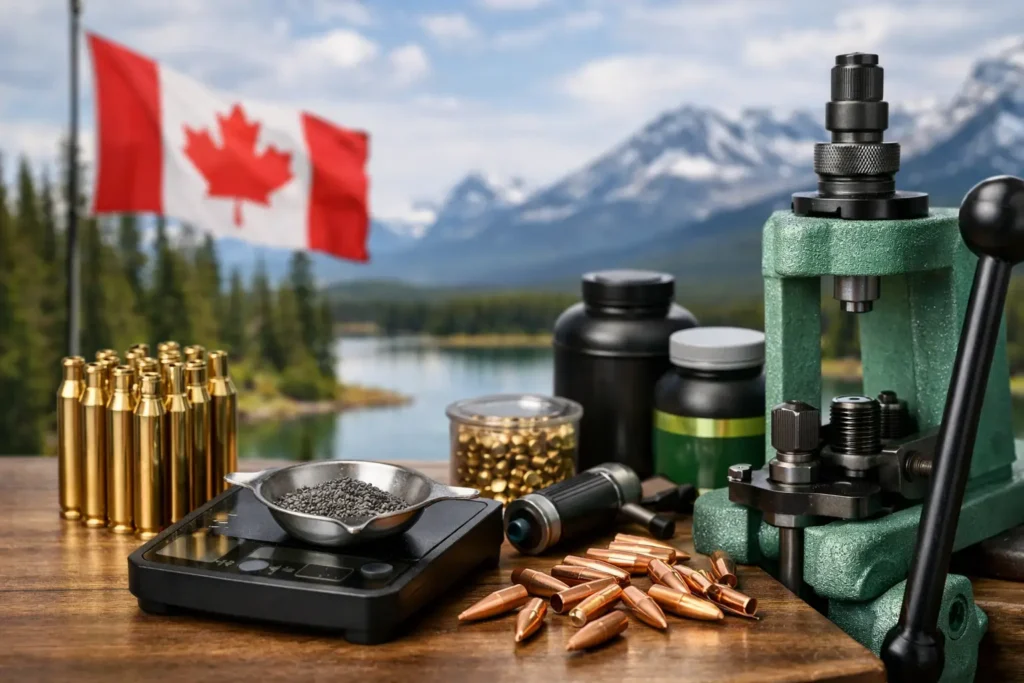
A Canadian handloading supply forecast is most useful when it helps you decide what to buy before a load development session, hunting season, or match schedule is on the line. For 2026, the practical outlook is measured rather than dramatic: availability should continue to improve unevenly, while the most popular primers and versatile powder lines may still move quickly when fresh inventory arrives.
The reloaders who stay productive are not necessarily the ones chasing every restock. They are the ones who know which components are essential to their established loads, which substitutes are genuinely workable, and how much reserve makes sense for the shooting they actually do. Precision starts with consistency, and supply planning is part of that discipline.
Canadian Handloading Supply Forecast: What to Expect
Expect primers to remain the category that demands the most attention. Supply conditions can improve while individual classes remain difficult to catch at the exact moment you need them. Small rifle primers, large rifle primers, and popular magnum variants often see the fastest turnover because they serve broad groups of rifle shooters, from high-volume competitors to hunters preparing proven loads.
That does not mean every primer purchase needs to be urgent. It means the right time to buy is when the specific primer you have already developed a load around is in stock and your on-hand quantity is approaching a sensible floor. Switching primer brands or moving between standard and magnum primers is not a casual substitution. Ignition characteristics can change pressure behavior, velocity spread, and group performance. Any component change deserves a return to published data and a careful workup.
Smokeless powder availability is likely to remain more varied by burn rate and brand than by the simple question of whether powder is available at all. Some established powders will appear regularly but sell through in popular sizes. Others may be available consistently yet be less useful for the cartridges on your bench. A shelf full of powder that does not suit your loads is not supply security.
For rifle reloaders, versatile propellants used across common hunting and target cartridges will continue to attract the most demand. Pistol and shotshell reloaders may find better opportunities to plan around powders that support multiple established recipes, but the same rule applies: purchase based on published, cartridge-specific data, not on a label that merely looks close.
Why Supply Still Changes Quickly
Reloading components do not move through the market on a perfectly smooth schedule. Production capacity, import timing, distributor allocations, transportation requirements, seasonal demand, and consumer buying patterns all affect what appears in stock and how long it remains there.
A strong hunting season can tighten demand for familiar rifle components. Competition calendars can increase demand for small rifle primers and powders favored by high-volume shooters. A single popular cartridge trend can influence shelves far beyond that cartridge because many powders serve several applications.
Canada adds another layer of planning. Dangerous-goods handling and regulated shipping requirements make primers and powder different from ordinary e-commerce purchases. Availability online is valuable, but it does not eliminate the need to order before the last sleeve of primers or final pound of powder is gone. It simply gives serious reloaders a clearer way to act when the correct component becomes available.
The key distinction is between a temporary out-of-stock notice and a true long-term shortage. A temporary gap calls for patience and monitoring. A longer gap may justify revisiting your component plan, but only if you can do so safely and with validated data. Reacting to every short interruption by buying unfamiliar components usually creates more load-development work than it solves.
Plan Around Your Proven Loads
The most reliable forecast is the one built from your own loading records. Start with the cartridges you shoot most, the number of rounds you realistically expect to load, and the exact primer and powder combinations that have delivered dependable results.
A hunter who fires a limited number of practice rounds and verifies a zero before season needs a different reserve than a PRS competitor, a weekly pistol shooter, or someone loading for multiple family members. There is no universal number of primers or pounds of powder that qualifies as “enough.” The right quantity depends on your rate of use, storage capacity, budget, and how difficult your preferred components are to replace.
For most experienced reloaders, a practical plan has three layers. First is the working supply for the current season. Second is a reserve that protects established loads from normal restock gaps. Third is a limited backup option, such as an alternative published powder or primer choice that has been tested in advance for a specific cartridge.
That third layer is where discipline matters. A backup component is useful only after it has earned a place in your records. Keep separate load data, lot notes, velocity results, and zero confirmation for it. Do not assume a similar burn rate, a familiar brand, or a matching primer size will reproduce your primary load’s performance.
Buy Depth, Not Random Variety
When a trusted component is available, depth in a proven setup is generally more valuable than a broad collection of untested options. That may mean buying enough of one suitable powder to cover your expected loading schedule rather than splitting the budget among several powders you may never use.
There are exceptions. If you load several cartridges with distinctly different needs, a narrower inventory may leave you exposed. The better approach is to identify the few components that genuinely support your bench. A powder suitable for a favorite .308 Winchester load is not automatically the right answer for a magnum rifle cartridge, a pistol load, or a shotshell application.
Lot consistency also deserves consideration. A new lot does not automatically require a new load, but it does require attention. When moving to a new powder lot, compare it carefully against your established baseline and work within current published data. For precision shooting, a quick verification session before a major event is far cheaper than discovering a point-of-impact change on the firing line.
Primers Deserve Their Own Strategy
Primers are compact, essential, and often the hardest component to replace without affecting a developed load. Their role in reliable ignition is too important to treat as an afterthought.
Keep your inventory organized by class: small rifle, large rifle, small pistol, large pistol, magnum, shotshell, and any specialized requirements such as 50 BMG. Clear separation prevents inconvenient mistakes at the bench and makes shortages easier to see before they become a problem. If you load both standard and magnum primers, label storage and load records with extra care.
For high-volume shooters, buying primers in quantities that support consistent practice can be sensible when inventory is available. For lower-volume reloaders, the goal may be simpler: maintain enough of the exact primer used in your hunting or match load to avoid a last-minute component change. Both approaches are valid when they are tied to realistic use rather than panic buying.
Store primers and powder according to manufacturer guidance and applicable regulations. Keep original packaging intact, maintain a dry, stable environment, and avoid creating a storage setup that is difficult to inventory safely. Good storage protects both component condition and decision-making.
The 2026 Buyer’s Checklist
Before placing an order, ask whether the purchase improves your loading capability or merely responds to a fear of missing out. A focused check can prevent expensive clutter:
- Confirm the exact cartridge, bullet weight, primer class, and powder data you intend to use.
- Calculate component needs from a realistic round count, including practice, verification, and match or hunt preparation.
- Check your current lot numbers and remaining quantities before ordering duplicates or substitutes.
- Prioritize components for proven loads, then add only tested alternatives that fill a real gap.
- Review storage capacity and shipping timing so the order arrives well before your planned loading date.
This approach is especially useful when stock appears in waves. Real-time inventory creates an opportunity, but the best purchase is still the one that supports safe, repeatable ammunition on your bench.
A Better Way to Read Availability
Component availability is not a promise that a particular powder or primer will remain on the shelf next month. It is a signal to make a clear decision while the correct component is available. Reloaders who keep accurate records can act quickly without guessing.
Lee Reloading Canada is built for that kind of buyer: the shooter who knows the primer class, powder family, and performance standard required for the next load. Recognizable brands matter because dependable ignition and predictable charge behavior matter. The goal is not to accumulate supplies for their own sake. It is to keep proven ammunition possible when it counts.
For 2026, plan calmly, buy with purpose, and leave enough time for verification whenever any component, lot, or load changes. A well-stocked bench is valuable, but a well-documented bench is what keeps power and precision in every load.