
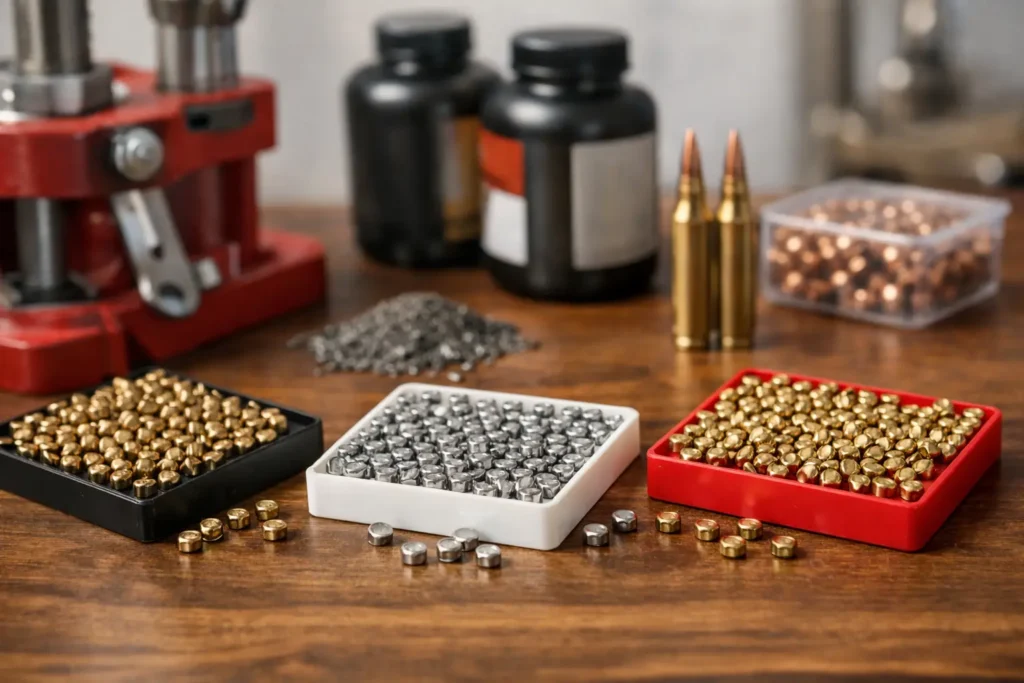
A load that groups beautifully with one primer can flatten out, open up, or show pressure sooner with another. That is why a solid primer selection guide for handloading matters. Primers are small, but they influence ignition quality, pressure behavior, velocity spread, and overall confidence in the finished round.
For experienced reloaders, primer choice is rarely just a matter of matching small rifle to small rifle brass and moving on. Cup hardness, flame intensity, case fill, powder type, ambient temperature, and firearm setup all affect what works best. Reliable ignition, every time, starts with choosing the right primer class, then refining from there.
What primers actually change
Primers do one job, but they do not all do it the same way. The brisance of the primer, the thickness and hardness of the cup, and the consistency of the priming compound all affect how the powder charge starts burning. In a mild pistol load, that difference may be subtle. In a precision rifle load or a cold-weather hunting round, it can be much more noticeable.
A hotter primer can help ignite spherical powders and heavily deterred charges more consistently. It can also raise pressure and alter the load’s accuracy node. A harder cup may be desirable in platforms with higher firing pin energy or pressure, but that same primer can be less forgiving in some lighter-strike applications. This is where component selection becomes part of load development, not just part of assembly.
Primer selection guide for handloading by category
The first rule is simple: use the exact primer type specified in reputable load data whenever possible. Small pistol, large pistol, small rifle, and large rifle primers are not interchangeable just because dimensions look close. Internal construction and intended pressure range matter.
Small pistol primers are built around pistol pressure levels and ignition demands. They are common in many handgun cartridges and some straight-wall loads. Small rifle primers are generally built with thicker or harder cups to handle higher pressure and different firing conditions. Even when a cartridge uses the same nominal primer size, switching between pistol and rifle primers without tested data is not a shortcut worth taking.
Large pistol and large rifle follow the same logic. Large rifle primers are intended for rifle pressures and powder columns that often need a different ignition profile. Magnum versions are not just marketing labels. They are designed to provide a stronger, longer, or more energetic ignition event, often useful with slower powders, larger cases, or harsh environmental conditions.
Shotshell primers are their own category and should be treated that way. The same goes for 50 BMG primers, which are built for a completely different operating envelope. If the cartridge calls for a specific primer family, stay in that family.
Standard vs magnum primers
This is where many reloaders start asking the right questions. A magnum primer is not automatically better, and a standard primer is not automatically safer or more accurate. It depends on the powder, case volume, temperature range, and the performance goal.
Magnum primers often make sense when using slow-burning powders in larger rifle cases, ball powders that benefit from stronger ignition, or hunting ammunition expected to perform in severe cold. They can improve consistency when the powder charge is difficult to light uniformly.
At the same time, magnum primers can tighten one load and ruin another. In some cartridges, they raise pressure enough to require a meaningful reduction and full workup from the beginning. In others, they shift the velocity spread in the wrong direction or move the best accuracy node away from the charge weight you were building around. If published data specifies a magnum primer, follow that data. If you are working with data that allows a choice, treat the change as a component change, not a minor substitution.
Cup hardness and firearm fit
A good primer selection guide for handloading also has to account for the firearm. Primer cup hardness affects both reliability and pressure tolerance. Some primers are known for softer cups and easier ignition. Others are valued for tougher cups that better resist cratering or piercing in higher-pressure rifle loads.
That matters in practical use. A bolt rifle built for precision work may show a clear preference for one primer based on extreme spread and group size. An AR-platform rifle may benefit from a primer with a tougher cup, especially if you want a wider margin against slamfire risk from a free-floating firing pin. A tuned competition pistol with a reduced-power hammer spring may prefer a more easily ignited primer to maintain reliability.
This is not just about what fits the case. It is about what fits the system.
Powder type changes the answer
Powder and primer work together. Extruded powders often ignite well with standard primers in cartridges where the load data was developed that way. Ball powders can be less forgiving and may respond better to a hotter primer, especially in colder conditions or at lower loading density.
That does not mean every spherical powder needs a magnum primer. It means ignition characteristics should be considered part of the whole recipe. If you are loading with Hodgdon, IMR, Winchester, Ramshot, Accurate, Alliant, Vihtavuori, or Shooters World powders, follow tested data first and use field results as a secondary filter. Chasing velocity while ignoring primer influence is one of the fastest ways to create inconsistent ammunition.
When changing primers, start over intelligently
Reloaders often change primers because availability changes, not because they wanted to. That is real-world handloading, especially when buying specialized components online. But even if the new primer matches the same size and category, you should still approach it as a fresh workup.
Drop back from the established charge and watch the usual indicators carefully. Velocity changes, group shift, ignition consistency, and pressure signs all deserve attention. A new primer may produce nearly identical results, or it may surprise you. The point is not to be overly cautious for the sake of it. The point is to protect accuracy, reliability, and safety by respecting how much this small component can affect the finished load.
If you keep records, note the exact primer brand, product line, and lot with the load data. That habit saves time later and makes troubleshooting much easier when a proven load suddenly behaves differently.
Brand preference vs actual performance
Most experienced reloaders have primer brands they trust, and usually for good reason. Consistency from lot to lot, packaging quality, sensitivity, and cup strength all matter. But preference should still be tested against the cartridge and use case.
A primer that performs extremely well in a .223 precision load may not be your best choice in a magnum hunting cartridge. A favorite pistol primer may feel perfect in one striker-fired platform and less ideal in another. Reliability first, then consistency, then fine accuracy tuning – that order usually produces better decisions than choosing by habit alone.
When premium components are hard to source, the best move is often to stay flexible within safe, published boundaries. A dependable inventory of authentic primers from recognized brands is not just convenient. It supports better load development because you can work with components you trust and buy again.
A practical way to choose the right primer
Start with published data for the exact cartridge, bullet weight, and powder. Match the primer class exactly. Then decide whether your application adds any special demands, such as cold-weather hunting, semi-auto rifle use, high-volume pistol shooting, or precision long-range work.
From there, think in terms of fit. Does the powder tend to need stronger ignition? Does the firearm benefit from a harder cup? Are you trying to reduce velocity variation, improve group shape, or simply maintain dependable function with a proven load? Those questions narrow the field quickly.
For many reloaders, the best answer is not the hottest primer or the most expensive one. It is the primer that gives stable ignition, clean pressure behavior, and repeatable results in that exact load. Power and precision in every load comes from matching components properly, not forcing one component to do everything.
If you are buying primers for multiple cartridges at once, organize by application rather than by brand loyalty alone. Keep your rifle, pistol, magnum, shotshell, and specialty primers clearly separated, and resist the temptation to substitute based on convenience. Lee Reloading Canada serves reloaders who already know that consistency starts before the bench – with the right components in stock, ready to work.
The best primer choice is usually the one that makes your load boring in the best possible way: easy ignition, predictable numbers, and no surprises when it matters.