
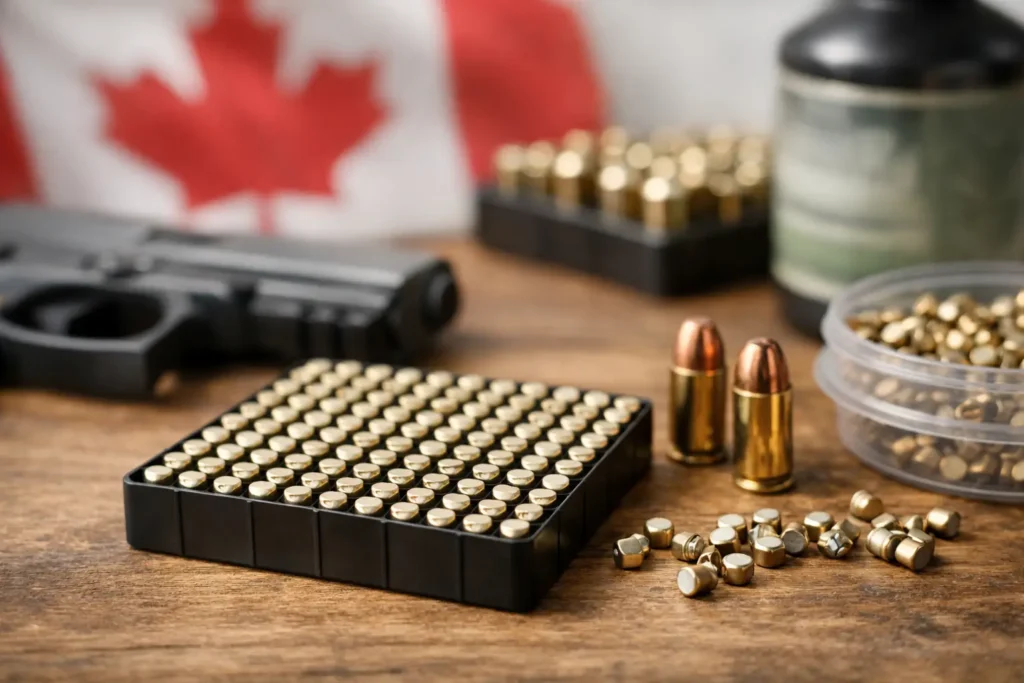
If you have ever built a pistol load around a powder charge you trust, only to lose time hunting for the right primer, you already know why small pistol primers Canada remains a high-intent search. For experienced reloaders, the issue is rarely just finding any primer. It is finding the correct primer, from a trusted maker, in stock, and ready to support consistent ignition across the loads you actually shoot.
That matters more than it gets credit for. Primers sit at the front end of every performance conversation, even when powder choice and bullet design get most of the attention. In handgun cartridges, especially common high-volume calibers, a small change in primer behavior can show up in velocity spread, felt recoil, pressure characteristics, and overall confidence at the bench or on the range.
What reloaders mean when they search small pistol primers Canada
Most buyers using that search term are not browsing casually. They are usually looking for standard small pistol primers for cartridges such as 9mm Luger, .38 Super, .357 SIG, some .38 Special loads, and selected other handgun applications that call for a small pistol cup and ignition profile. In many cases, they are also checking whether small pistol magnum primers are available, because those can matter for specific powders, load densities, or seasonal shooting conditions.
The practical challenge is that primer availability can fluctuate faster than almost any other reloading component. Powders come and go, bullets cycle through shortages, but primers can disappear almost overnight when demand spikes. That is why serious reloaders tend to shop with a narrower standard. They want authentic, brand-name inventory, clear product labeling, and a supplier that treats primer fulfillment like a specialty operation rather than an afterthought.
Choosing small pistol primers Canada by application
The first decision is simple on paper and less forgiving in practice – standard or magnum. A standard small pistol primer is the right fit only when your data calls for it. A magnum primer is not an upgrade in the general sense. It is a different component with different ignition characteristics, and the load data must support that choice.
For many target and general-use handgun loads, standard small pistol primers are the baseline. They offer the ignition profile most published data expects, and they are often the best starting point when you are trying to preserve consistency across a proven recipe. If your goal is predictable function, repeatable velocities, and a stable pressure picture, sticking to the primer type in your tested data remains the disciplined move.
Magnum variants have their place. Certain powders, heavier charges, colder conditions, or specialized performance goals may justify them. But this is where experienced reloaders separate convenience from process. If only magnum primers are available and your load was built around standard primers, you do not simply substitute and continue. You go back to appropriate data, reduce and work up carefully, and verify performance again.
That trade-off shows up often in the current market. Availability sometimes pushes component decisions more than ideal load planning. When that happens, the right answer is not to force equivalence. The right answer is to treat the new primer as a meaningful variable.
Why brand consistency matters more than price alone
Most reloaders understand that primers from major manufacturers are built to a standard, but not all primers behave identically in every firearm. Cup hardness, ignition energy, and lot-to-lot consistency can all affect real-world results. A striker-fired pistol with a lighter trigger setup may respond differently than a factory-duty style platform. A revolver tuned for match work may be more sensitive than a stock semi-auto built for broad reliability.
That is why many experienced buyers stay loyal to specific brands once they have confirmed reliable ignition in their firearms. It is not brand nostalgia. It is process control. If a given primer has proven itself through your chrono data, your function testing, and your field use, there is real value in buying the same product again instead of chasing small price differences.
This is especially true for high-volume shooters. If you load in quantity for training, competition, or regular range work, consistency across several thousand rounds matters more than saving a marginal amount on a component that drives ignition. Reliable ignition, every time, is not marketing language when you are trying to maintain the same feel and performance from lot to lot.
Availability is part of performance
A lot of reloading advice treats supply as separate from load development. In real buying behavior, it is not. A component you cannot replace is a component that can interrupt a working system. When reloaders search for small pistol primers Canada, they are often trying to solve for continuity as much as specification.
That is one reason specialized retailers matter. A focused supplier built around primers and smokeless powder usually understands the urgency behind in-stock status, the need for accurate category separation, and the importance of shipping procedures that match regulated components. For the buyer, that translates into fewer wrong turns and a faster path from search to secure order.
It also means product pages and inventory signals need to be trustworthy. There is a big difference between a broad outdoor seller that occasionally carries primers and a specialist operation that treats primers as a core category. If you are ordering components that affect pressure, ignition, and safety, precision in the retail process matters too.
What to check before you place an order
Experienced reloaders do not need a basic primer tutorial, but a quick verification step still prevents expensive mistakes. Before ordering, confirm the primer size and type listed in your current load data, and verify the intended cartridge family. That sounds obvious, yet ordering errors still happen when availability is tight and buyers move too fast.
Pay close attention to standard versus magnum designation, package quantities, and manufacturer naming conventions. Some shoppers also overlook the value of buying enough of the same lot or same brand to support a meaningful run of ammunition. If you are testing a load or maintaining a known match setup, fragmented component buying can add unnecessary variables.
Storage matters too. Primers should be stored in their original packaging, in a cool and dry location, away from heat sources and away from bulk handling that could compromise safety. The purchase decision is only one part of the chain. Good inventory at home protects both performance and peace of mind.
Small pistol primers Canada and load discipline
The strongest buying decision is still tied to load discipline. Primers are not interchangeable by assumption, and even substitutions within the same class require care. Published data, firearm-specific reliability, and environmental conditions all shape the right choice.
For example, a load that cycles perfectly with one standard small pistol primer in mild temperatures may feel different with another brand in colder conditions. That does not automatically mean one primer is better. It means the system changed. The art of reloading, perfected, is really about managing those variables instead of pretending they do not exist.
This is also where online ordering has changed the buying experience for serious shooters. Instead of waiting for local shelf luck, reloaders can shop a specialized inventory built around exact component categories and recognized brands. For a retailer such as Lee Reloading Canada, that focus is the point – dependable access to performance-driven components for buyers who already know what they need.
When to buy and how much to keep on hand
Primer buying tends to reward planning. If you shoot regularly, buying only when you are down to your last brick invites disruption. The smarter approach is to maintain enough supply to support your normal loading cycle while staying within safe storage practices and your actual consumption rate.
How much that means depends on your volume. A casual range shooter and a weekly competitor live in different inventory realities. The right quantity is not whatever seems available at the moment. It is the amount that lets you maintain consistent loads without pushing you into unnecessary substitutions later.
There is also a timing factor. When supply opens up, experienced buyers often move quickly because they remember how fast primers can tighten. That is not panic buying. It is simply understanding that a reliable source of authentic primers is part of keeping your reloading bench productive.
Finding the right small pistol primer is rarely about one transaction. It is about keeping your loads consistent, your process disciplined, and your supply line dependable enough that the next range session starts at the bench with confidence.