
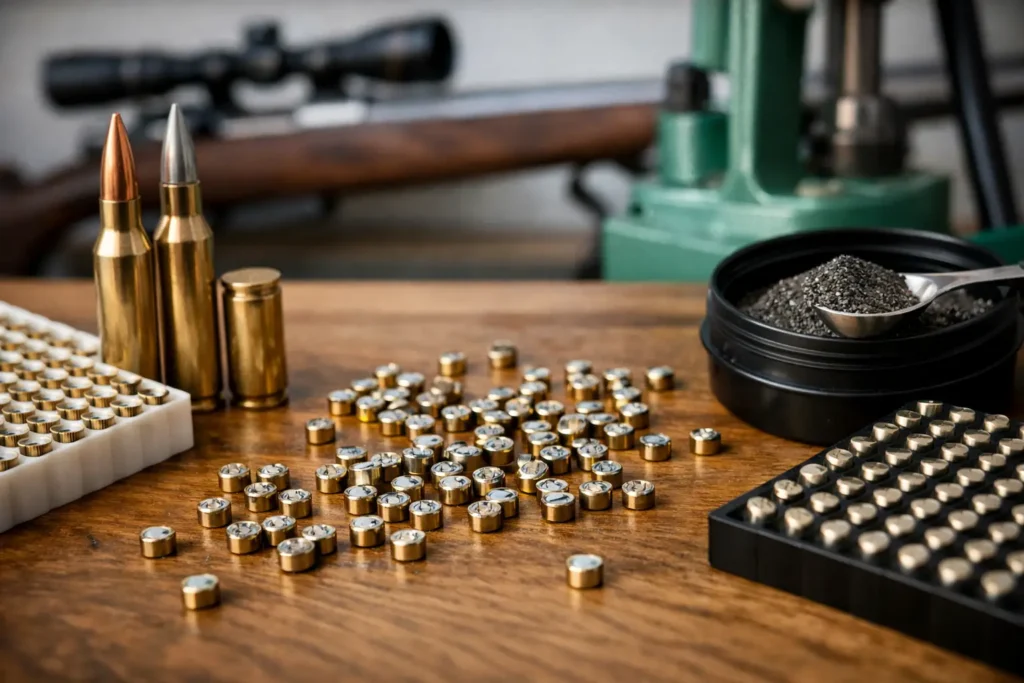
A load that groups well in mild weather can start acting different the moment temperatures drop, powder charges get denser, or the case simply asks more from the primer. That is usually when reloaders start looking more closely at magnum primers Canada buyers can actually source with confidence – not as a catch-all upgrade, but as a specific tool for reliable ignition.
For experienced reloaders, that distinction matters. A magnum primer is not automatically better than a standard primer. It is hotter, often longer in flame duration, and designed to ignite harder-to-light powder charges more consistently. In the right application, that can tighten performance and improve field reliability. In the wrong application, it can raise pressure, change velocity spreads in unhelpful ways, and force a load to behave unlike the data you started with.
When magnum primers make sense
Magnum primers earn their place when ignition is the real problem to solve. That usually means larger powder charges, slower-burning powders, cold-weather hunting loads, or cartridges with enough case capacity that a standard primer may not light the powder column as uniformly as you want.
Magnum rifle applications are the obvious example. Big-game cartridges loaded with slower powders often benefit from a stronger initial flame, especially when consistent ignition matters more than shaving every possible bit of pressure. If a rifle load is built for late-season hunting, not a warm indoor bench session, the primer choice deserves the same level of attention as powder selection and bullet seating depth.
Handgun reloaders run into the same question with magnum pistol loads, especially when using slower powders in cartridges designed for higher performance. Here again, the goal is not extra power from the primer itself. The goal is to ignite the charge the way the powder was intended to burn.
That said, there are plenty of loads where standard primers are still the better choice. Fast powders, moderate charges, and cartridges that already show excellent consistency with standard ignition usually do not need a hotter primer. Switching just because magnum sounds more capable is not a performance strategy.
Magnum primers Canada buyers should think about first
The practical question is not simply whether magnum primers are available. It is whether your exact load calls for them, and whether the primer you buy matches both your cartridge class and your published data.
Start with primer size and application. Small rifle magnum and large rifle magnum are not interchangeable with each other, and magnum pistol primers are not a substitute for rifle primers just because dimensions may appear similar in some categories. Cup thickness, ignition characteristics, and intended pressure range all matter. Experienced reloaders know that primer fit is only part of the story.
Then look at the powder. Ball powders and some slower extruded powders can be more demanding to ignite consistently, which is why certain published recipes specify magnum primers from the beginning. If your data calls for a magnum primer, treat that as part of the recipe, not an optional accessory.
Temperature is the other major variable. A load that performs cleanly in summer may show delayed ignition or wider velocity variation in freezing conditions. Hunters who build ammunition for real field use often choose magnum primers for that reason alone, especially in cartridges where powder volume and environmental conditions combine to make ignition less forgiving.
What changes when you switch from standard to magnum
The short answer is pressure, velocity, and overall load behavior can all change.
Sometimes the difference is modest. Sometimes it is enough to require a full workup from a reduced charge. A hotter primer can increase peak pressure and alter burn characteristics, especially with powders that are already easy to ignite. That means a safe standard-primer load does not automatically remain safe with a magnum primer substituted in.
This is where disciplined reloading matters. If you move to a magnum primer, return to published data whenever possible. If you are working within data that allows that primer class, reduce appropriately and work back up while watching for pressure signs and tracking velocity. Reliability matters, but so does staying inside the operating window of the cartridge, firearm, and component combination.
Precision shooters sometimes find that a magnum primer improves extreme spread in one setup and hurts it in another. That is not unusual. Primer performance is tied to the entire system: case volume, neck tension, powder type, barrel, and the conditions in which the round is fired. There is no universal answer that fits every rifle or revolver.
Choosing the right magnum primer category
The cleanest way to shop is by use case, not by label alone.
Large rifle magnum primers are typically where reloaders start when building loads for larger-capacity rifle cartridges and slower-burning powders. They are common in hunting and long-range applications where dependable ignition in variable conditions matters.
Small rifle magnum primers are more specialized but just as important when the cartridge and data call for them. In some high-pressure small rifle loads, primer construction is as relevant as flame intensity. Reliability is not only about ignition strength. It is also about choosing a primer built for the pressure environment.
Large pistol magnum and small pistol magnum primers are most relevant when loading revolver or pistol cartridges that use slower powders and true magnum charge structures. They can also appear in published data for specific non-magnum cartridges when powder choice demands it, but that should always come from data, not assumption.
Brand preference matters too. Different manufacturers produce different primer characteristics, and seasoned reloaders often stay consistent once they find a combination that delivers the ignition pattern and accuracy they want. If you change primer brands within the same magnum class, treat that change with the same respect you would give any other component substitution.
Availability matters more than it used to
Anyone who has bought primers in the last several years understands the reality: supply consistency is part of load planning now. The challenge is not only finding magnum primers. It is finding the right type, from trusted brands, in stock, and ready to ship without guesswork.
That is why specialized inventory matters. A retailer focused on primers and smokeless powder is simply more useful to a serious reloader than a general outdoor store with scattered component listings and uncertain stock status. If you are trying to keep a hunting load, a match load, or a high-volume practice schedule running, product clarity and real-time availability are not minor conveniences. They are part of the buying decision.
For that reason, many reloaders buying magnum primers Canada wide prioritize source quality as much as primer type. Authentic branded inventory, clear category structure, and a straightforward ordering process reduce mistakes and save time. Lee Reloading Canada fits that specialist model well because the catalog is built around the components reloaders actually search for, not broad accessory traffic.
Storage, handling, and realistic expectations
Even the right primer will not fix poor process control. Primers should be stored in stable conditions, handled carefully, and seated consistently. A magnum primer can improve ignition reliability, but it cannot compensate for mixed brass, inconsistent powder drops, poor neck tension, or load data that was never matched to the component set in the first place.
It also helps to keep expectations realistic. A magnum primer is not a shortcut to more velocity worth chasing on its own. Its real value is dependable ignition under conditions that demand it. When that requirement exists, the performance gain is meaningful. When it does not, the best result may simply be more pressure and less predictable tuning.
The better approach is to treat primer selection the way serious reloaders treat every other part of the build – purpose first, data second, and consistency always. If your cartridge, powder, and conditions call for magnum ignition, buy with confidence. If they do not, standard primers may still be the smarter choice. The art of reloading is not using the hottest component on the shelf. It is matching every component to the job so the round performs exactly the way it should when it counts.