
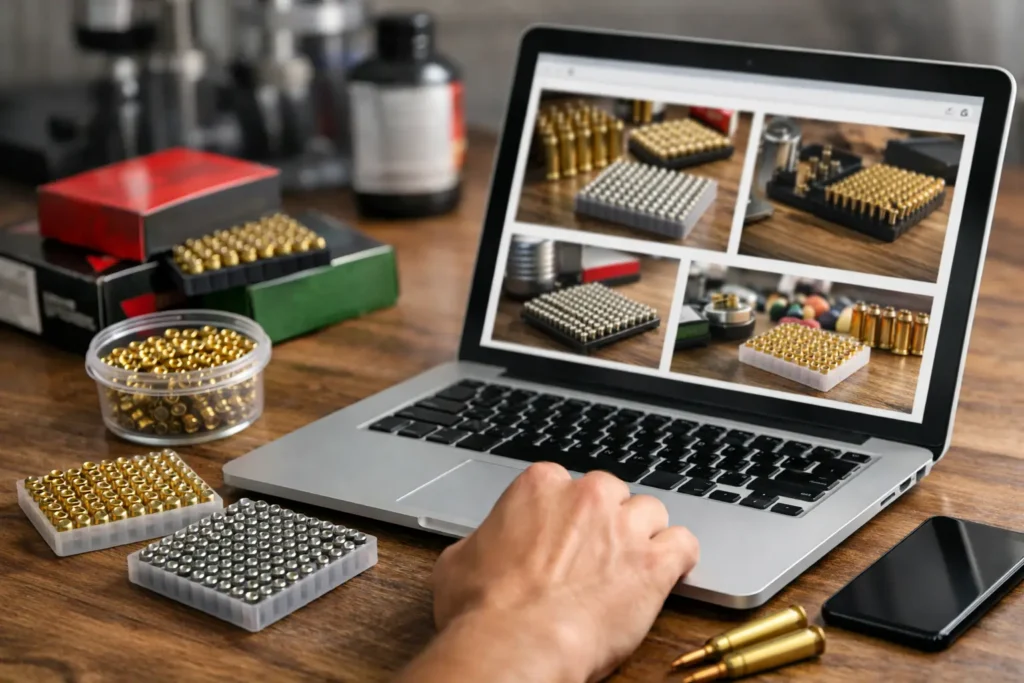
A primer shows up as available, you add it to cart, and ten minutes later it is gone or tied up in a backorder queue. Serious reloaders know that finding in stock primers online is rarely about luck alone. It comes down to knowing exactly what you need, recognizing a retailer that actually understands component demand, and moving fast without getting sloppy.
When primers are tight, small differences matter. Primer class, brand preference, lot consistency, shipping procedures, and inventory accuracy all affect whether your next order supports your load plan or forces a compromise. If you are buying for precision rifle work, high-volume pistol loading, or seasonal hunting prep, the goal is not simply to buy primers. The goal is to secure the right primers with confidence.
Why in stock primers online sell fast
Primers sit at the center of the reload. Powder choice gets most of the discussion, but ignition consistency is what gives the load a stable starting point. That is why demand stays high across large rifle, small rifle, large pistol, small pistol, magnum variants, shotshell, and 50 BMG categories.
Online demand also concentrates quickly around trusted brands and common sizes. A retailer may have inventory in one primer class while another class disappears immediately. Small rifle and small pistol often move fast because they serve such a broad base of shooters. Magnum and specialty primers can stay available longer, but only if buyers are not trying to substitute them into standard data without a plan.
This is where experienced reloaders separate convenience from performance. If your load data, firearm, and application call for a specific primer type, the right move is to buy to spec, not to force a workaround because a random listing happened to be available.
What to check before you buy in stock primers online
The first step is simple but often rushed. Confirm the exact primer category your load requires. Standard versus magnum is not a minor detail, and neither is rifle versus pistol, even when dimensions seem close on paper. You are buying for ignition behavior, pressure characteristics, and repeatable performance, not just for fit.
Brand matters too, especially if you are trying to preserve an established load. Many reloaders have seen velocity spread, pressure signs, or point-of-impact changes after a primer switch. Sometimes the difference is manageable. Sometimes it means going back to the bench and reworking the load from a safe starting point. If consistency matters to you, treat primer brand changes with the same respect you give powder changes.
It also pays to look at packaging quantity and order limits. A listing that looks attractive may not make sense if it restricts volume so tightly that you still end up short for the season. On the other hand, a retailer with a clear product structure and straightforward checkout often saves more time than chasing five smaller orders from questionable sources.
The signs of a dependable primer retailer
Not every seller offering in stock primers online is built for reloaders. Some treat primers like just another catalog item. Specialists do not. You can usually tell the difference quickly.
A dependable retailer organizes inventory by actual reloading logic. Primer classes are clearly separated. Product descriptions are direct. Recognizable brands are easy to compare. Availability appears current enough that you are not wasting time checking out with products that were already gone fifteen minutes ago.
The buying process matters just as much. Reloaders do not want friction, vague policies, or unclear fulfillment standards. They want a serious source that understands regulated component sales, secure payment, and fast, accurate shipping. That is one reason focused retailers such as Lee Reloading Canada stand out for buyers who want a specialist rather than a general outdoor store trying to cover everything.
Choosing the right primer without cutting corners
If you already know your preferred primer, the decision is easy. Buy the same type, from a trusted maker, in the quantity that supports your loading schedule. The challenge comes when your first choice is unavailable.
At that point, the right question is not, What can I get away with? It is, What change can I manage safely and predictably? A substitute primer may be completely workable, but only if you treat it as a component change and adjust your process accordingly. That means checking published data, reducing and reworking where appropriate, and watching for pressure and performance changes.
For rifle loads, especially precision applications, primer changes can affect SD, ES, and group shape in ways that are noticeable on target. For pistol reloaders running volume, reliable ignition and clean cycling may matter more than tiny velocity differences, but consistency still counts. If you are loading for a hunting rifle, cold-weather reliability may push your decision in a different direction than a range-only setup. It depends on the cartridge, the firearm, and the performance standard you are trying to maintain.
How to shop faster when supply is tight
Speed matters, but discipline matters more. The best buyers do not begin their search when they are down to their last tray. They keep a realistic reserve based on how much they shoot and how specialized their loads are.
That reserve looks different for everyone. A casual hunter loading a single rifle cartridge can operate differently from a competitive shooter feeding multiple platforms. The point is to know your own consumption rate and buy ahead of need, not in panic. Panic buying usually leads to overpaying, buying the wrong primer, or stacking inconsistent component lots with no plan.
It also helps to shop by category instead of by broad search. If a retailer has dedicated sections for small rifle, large rifle, small pistol, large pistol, magnum, shotshell, and 50 BMG primers, you waste less time and make fewer mistakes. Category clarity is not cosmetic. It is part of safe, efficient ordering.
Pricing, value, and the real cost of getting it wrong
Primers are one of those components where cheap and good are not always found together. Price matters, but value comes from authenticity, storage condition, current inventory, and fulfillment reliability. A fair price from a trusted specialist is usually worth more than a questionable deal that introduces delays or doubt.
There is also the hidden cost of the wrong buy. If you order the wrong primer class, switch brands without planning for load development, or buy from a seller with poor inventory controls, you may spend more time and money correcting the mistake than you saved on the order. For experienced reloaders, that trade-off is rarely worth it.
This is especially true when your powder supply and bullet selection are already dialed in. The primer is not the place to get casual. Reliable ignition, every time, is not a slogan. It is the baseline for load confidence.
In stock primers online for different shooting goals
The right buying approach changes with use case. Precision shooters usually prioritize consistency first, then quantity. They tend to stick closer to proven brands and resist substitutions unless they can test properly. Hunters often want dependable ignition under field conditions and enough supply to confirm zero, practice, and load for the season without changing components halfway through.
High-volume pistol reloaders may put a premium on supply continuity. If you shoot often enough, stable access can be almost as important as brand loyalty, provided the primer performs well in your loads. Shotgun reloaders and 50 BMG loaders face a narrower market, which makes specialist inventory even more useful. In those categories, broad retail sites often fall short because they do not stock deeply or organize clearly.
The smarter way to buy with confidence
The strongest online buying habits are simple. Know your primer class. Stick to trusted brands when possible. Treat substitutions with respect. Buy from a retailer that understands reloading rather than one that happens to list reloading products.
When you find in stock primers online from a specialist with real inventory, clear categories, and a streamlined order process, the purchase becomes straightforward. That is exactly how it should be. Reloaders already do their precision work at the bench. The ordering process should support that standard, not complicate it.
A good component source does more than fill an order. It gives you the confidence to keep your load development, practice schedule, and field prep moving without interruption. In a market where availability can shift fast, that kind of reliability is part of the load plan.