
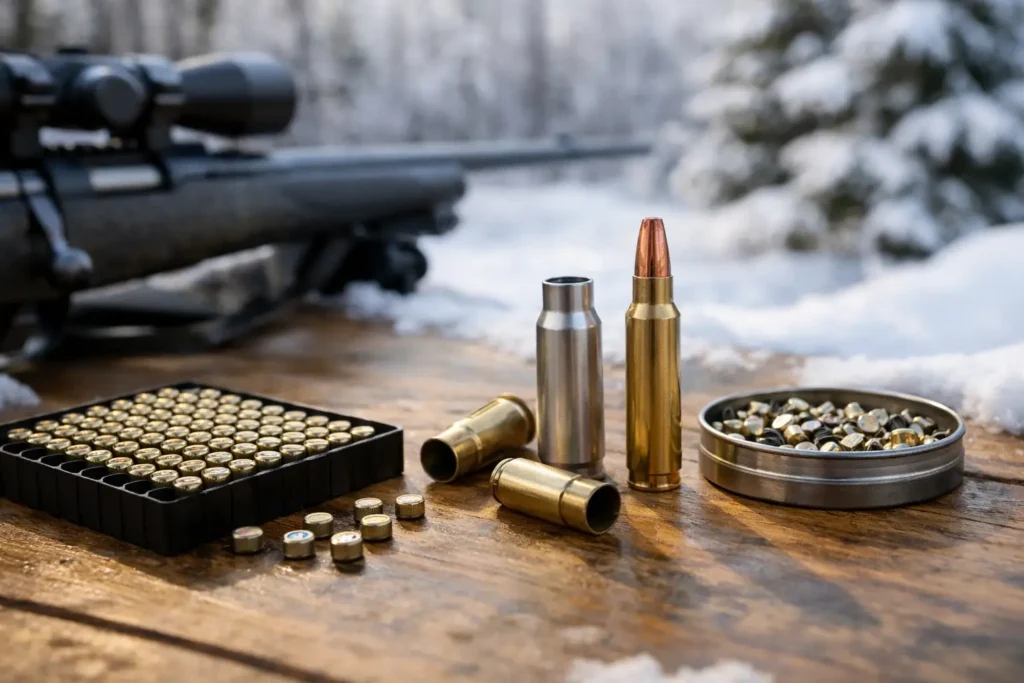
Cold weather has a way of exposing weak links in ammunition. If you are asking which primers work in winter, the practical answer is not simply “magnum primers.” Reliable ignition depends on using the correct primer class for the cartridge and published load data, then evaluating how the complete load performs at the temperatures you expect to encounter.
A primer that delivers excellent results on a mild range day may not produce the same ignition characteristics during a late-season hunt, a winter match, or a long day in a freezing blind. Primer selection matters, but powder type, cartridge design, firearm condition, ammunition storage, and cold-weather validation all matter with it.
Which Primers Work in Winter?
Quality primers from established manufacturers are made to function across normal field temperatures when they are correctly matched to the cartridge and load. The best winter choice is usually the primer specified in reliable, current published data for your exact cartridge, bullet weight range, powder, and case configuration.
For many rifle applications, standard rifle primers remain the correct choice in cold conditions when paired with an appropriate powder and a proven load. Magnum rifle primers can provide a hotter or longer ignition pulse and are often called for with certain slow-burning powders, larger cases, or loads developed for more demanding ignition conditions. That does not make them a universal winter upgrade.
The same principle applies to pistol ammunition. Standard small pistol and large pistol primers are generally appropriate when the published data calls for them. Magnum pistol primers may be specified for particular cartridges or powders, but changing primer type solely because the forecast is cold can alter pressure, velocity, and accuracy.
The key point is straightforward: use the primer class your load data specifies first. Treat a move from standard to magnum, or from one primer manufacturer to another, as a component change that requires a careful return to published starting data and proper load development.
Primer Class Matters More Than the Label
Reloaders sometimes use “hotter” and “better in cold weather” as if they mean the same thing. They do not. A magnum primer is designed to provide a different ignition characteristic, but it cannot correct every cause of cold-weather performance issues.
Large rifle, small rifle, large pistol, small pistol, shotshell, and 50 BMG primers are not interchangeable categories. Their dimensions, cup characteristics, sensitivity, and intended applications differ. Selecting the correct physical primer for the cartridge is non-negotiable before any discussion of winter performance begins.
Within a given class, manufacturers may also produce standard, magnum, match, or benchrest-oriented options. These products can differ in consistency and ignition behavior. A match-grade primer may support more uniform results in a precision load, while a magnum version may be the correct component for a particular powder and cartridge combination. Neither designation automatically means it is the best answer for every cold-weather application.
For semi-automatic rifles, primer cup characteristics can deserve additional attention. The correct choice must account for the firearm design and the published data, not only temperature. Reliability and safety always come before trying to solve a cold-weather concern with a single component swap.
Powder Choice Often Drives Winter Results
When ammunition produces inconsistent velocities or delayed ignition in the cold, powder selection is frequently a larger part of the story than the primer alone. Different powders respond differently to temperature changes, especially when a load is taken far below the temperature at which it was developed.
Some propellants are widely regarded for stable performance across changing conditions, while others can show more variation as temperatures move from warm to freezing. That variation may affect velocity, point of impact, pressure behavior, and how consistently the powder column ignites. A suitable primer helps initiate the process, but it does not erase a powder’s temperature sensitivity.
Case capacity and powder charge position can also influence ignition consistency. Larger rifle cases, low-density loads, and some slow-burning powders may place greater demands on the ignition system. This is one reason published data sometimes specifies a magnum primer. Follow that specification rather than assuming all cold-weather ammunition needs one.
Do not substitute a magnum primer into a standard-primer load at the existing charge weight. Primer changes can affect peak pressure and ballistic performance. If a component change is necessary, consult current published data from the powder or bullet manufacturer and work up carefully within those guidelines.
Cold-Weather Testing Should Match Your Use
A load that groups well at 70°F is not automatically ready for a 10°F hunt. The most useful winter testing is controlled, deliberate, and relevant to the conditions where the ammunition will be used.
Start by confirming that the ammunition is loaded with the exact components supported by your data. Then test enough rounds to identify meaningful patterns rather than drawing conclusions from one shot. Observe ignition consistency, velocity if you use a chronograph, point of impact, and group size. Pay attention to any unusual report, delay, or change in firearm function.
To make the test meaningful, allow ammunition to cool to the expected field temperature before firing it. Keep the firearm, magazines, and ammunition handling conditions as consistent as practical. A cartridge removed from a warm pocket and fired immediately does not tell you much about how that same load will behave after sitting in a cold pack or vehicle.
A useful winter validation process includes checking your zero at the anticipated temperature. Even if ignition is fully reliable, changed velocity and environmental conditions can move your point of impact. For hunters and precision shooters, confirming that shift before the season is far more valuable than guessing at the range of a cold bore shot.
Do Not Overlook the Rifle or Pistol
Not every cold-weather firing problem begins with the primer. Thickened lubricant, moisture, frost, debris in the bolt or action, a weak firing pin strike, or a contaminated chamber can all create symptoms that resemble poor ignition.
A properly maintained firearm is part of a dependable winter system. Use lubricants appropriate for low temperatures, keep the action clean, and inspect firing pin and spring condition when reliable ignition is a concern. If multiple brands or lots of correctly selected primers produce inconsistent results in the same firearm, the firearm deserves attention before the load is blamed.
Ammunition handling matters as well. Keep cartridges dry, protect them from repeated condensation cycles, and avoid exposing primers to oils or solvents. Primers should be stored in their original packaging in a cool, dry location, away from heat sources and open flame. In the field, a sealed cartridge box or weather-resistant pouch can help prevent unnecessary moisture exposure.
A Practical Primer Selection Process for Winter
For experienced reloaders, the decision process is usually simpler than the marketing around “winter primers” suggests. Begin with the cartridge, then the manual. Select the correct primer size and type identified by current published load data. Next, choose a powder appropriate to the cartridge and the temperature range in which you intend to shoot.
If the data specifies a magnum primer, use a quality magnum primer in the proper class. If it specifies a standard primer, start there. When availability requires a switch between primer brands or versions, do not assume the new component will produce identical results. Reconfirm your load safely and test it under realistic conditions.
For hard-to-source components, buying enough of one tested primer lot for a season or a proven load can reduce unnecessary variables. Consistency is valuable for any shooter, but especially for those who depend on predictable ignition and point of impact when temperatures drop.
The Best Winter Primer Is the One Proven in Your Load
There is no single primer that makes every cartridge winter-proof. Standard primers can perform exceptionally well in cold weather when they are matched with appropriate powder and validated ammunition. Magnum primers can be exactly right when published data calls for them, particularly in applications that need stronger ignition, but they are not a blanket solution.
Build your cold-weather ammunition around compatible components, current data, clean firearm function, and honest field-temperature testing. When the morning is cold and the shot matters, dependable ignition comes from a complete, proven system rather than a shortcut at the primer tray.