
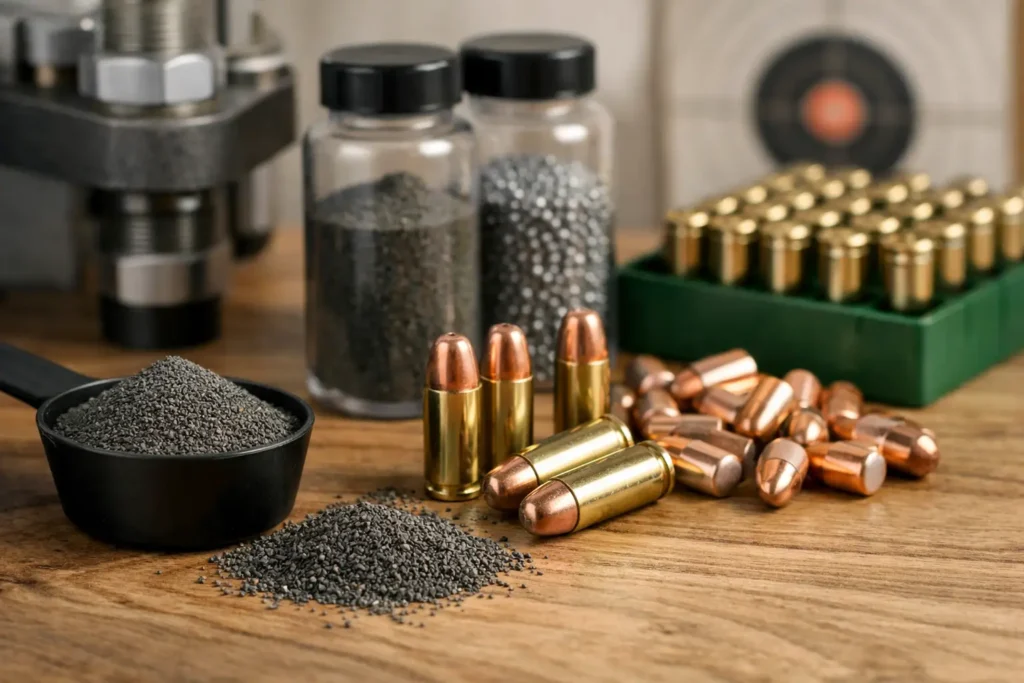
A 9mm load can look perfectly ordinary on the bench and still perform very differently on the target. When reloaders ask what powder for 9mm is best, the useful answer is not one brand or one canister. It starts with the bullet weight, intended use, firearm, and the published load data available for that exact component combination.
For most 9mm Luger handloads, the strongest choices are pistol powders that meter consistently, ignite reliably with standard small pistol primers, and have well-established data for common bullet weights. The right powder should support repeatable ammunition – whether the goal is soft practice rounds, dependable training ammunition, competition-focused recoil control, or a carefully developed defensive load.
What Powder for 9mm Depends on the Job
9mm is a high-pressure cartridge with limited case capacity. That makes powder selection less forgiving than many new reloaders expect. A small change in seating depth, bullet profile, case volume, or charge weight can have a meaningful effect on pressure. The first filter is always current, manufacturer-published data for your specific bullet type and weight.
Fast- to medium-fast-burning pistol powders are the traditional starting point for 9mm. They generally produce efficient performance in the cartridge’s compact case and tend to work well across popular 115-, 124-, and 147-grain bullet classes. Powders in this range are commonly chosen because they can provide clean ignition, practical velocities, and reliable function without requiring a heavily compressed load.
Your intended use determines what “best” means. A high-volume range shooter may value precise metering and economical charge weights. A competitive shooter may prioritize a smooth recoil impulse that keeps sights settled. Someone loading for a pistol-caliber carbine may be looking for reliable cycling and clean operation over longer strings. These are different requirements, even when the cartridge headstamp says 9mm.
For general range and training loads
Many reloaders prefer powders known for predictable metering through volumetric powder measures. Ball and fine-grain powders can be especially convenient when loading several hundred rounds in a session because they often throw uniform charges with less variation. Winchester 231, Hodgdon HP-38, Accurate No. 2, Ramshot Zip, and Shooters World Clean Shot are examples of powders commonly supported by 9mm data, subject to the exact bullet and component combination.
A powder that meters well is not automatically the right choice, but it removes one avoidable variable. Confirm throws on a dependable scale, inspect the powder level in every case, and never assume a setting remains correct after changing powders, lots, or equipment.
For softer recoil and match-focused performance
Shooters building ammunition for action-pistol competition often work toward a recoil character that feels controlled rather than sharp. Medium-speed options such as Alliant Sport Pistol, Winchester AutoComp, Hodgdon CFE Pistol, Ramshot Silhouette, and Accurate No. 5 are frequently considered where published data supports the desired bullet and performance level.
The trade-off is that a powder selected for a particular recoil feel may use more case volume than a faster alternative. That is not inherently a problem, but it makes correct overall length, seating consistency, and careful adherence to tested data even more important. Do not substitute a powder simply because it occupies a similar place on a burn-rate chart. Burn-rate charts are useful for broad comparison, not for generating load data.
For heavier 147-grain bullets
Heavy 9mm bullets are popular for suppressed use, steel shooting, and shooters who prefer a measured recoil impulse. They also demand closer attention to published data because bullet seating depth and usable case capacity become especially significant.
Powders commonly appearing in data for 147-grain 9mm bullets include Hodgdon Titegroup, Alliant Sport Pistol, Vihtavuori N320, Winchester 231/HP-38, CFE Pistol, and Accurate No. 5. The best choice depends on the velocity range, firearm function, and pressure-tested data available for your exact projectile. A 147-grain plated round nose, coated lead bullet, and jacketed hollow point may share a nominal weight while requiring different data considerations.
Burn Rate Is a Starting Point, Not a Load Recipe
Burn rate helps organize powder choices, but it cannot replace a load manual. Faster powders can be efficient and economical in 9mm, yet they may leave less margin for error when components or seating depth vary. Slower powders can offer a different pressure curve and recoil feel, though they may require more powder and may not be ideal for every light target load.
The practical question is whether a specific powder has tested data for the bullet you own, at an overall length that functions safely in your firearm and magazines. If that data exists, the powder is available, and its characteristics fit your purpose, it belongs on the shortlist.
This is also why one reloader’s favorite powder may not be yours. A powder that performs exceptionally under a 124-grain jacketed bullet at a particular overall length is not automatically the best answer for a 115-grain coated bullet or a 147-grain hollow point. Component details matter.
Metering, Cleanliness, and Temperature Behavior
A powder measure is a production tool, not a substitute for verification. Fine spherical powders usually meter with impressive consistency, which appeals to progressive-press users. Flake powders can also work very well, but some may show greater variation depending on the measure, baffle, operating rhythm, and individual lot.
Cleanliness is another real consideration, especially for shooters running high round counts. Residue is affected by pressure, bullet lubrication, firearm design, and the load itself, so it is rarely fair to label any powder universally clean or dirty. Still, choosing a powder that performs cleanly within its intended pressure range can reduce fouling during extended practice sessions.
If ammunition will be used across changing weather conditions, consult current manufacturer information and test cautiously within published limits. Reliable ignition and consistent velocity matter more than chasing a minor theoretical advantage on paper. Use the primer type specified by the data, and do not replace standard small pistol primers with magnum primers unless the manufacturer’s data specifically permits it.
Match the Powder to Your Components
The most dependable 9mm ammunition comes from treating the load as a complete system. Powder selection must align with the bullet, brass, primer, seating depth, crimp, and firearm chamber.
Start with a current manual or powder manufacturer’s data source and identify listings for your exact bullet style and weight. Select a powder with a clear data path, then begin at the listed starting charge and work up only according to the published instructions. Record powder lot, primer, case brand, overall length, velocity results when available, and any reliability observations.
Pay particular attention to cartridge overall length. 9mm bullet noses vary widely. A truncated cone, flat point, round nose, and hollow point can contact the rifling differently even at the same measured overall length. Confirm that completed dummy rounds chamber freely in the firearm and fit the magazine before loading a production run. Never use a seating depth copied from a different bullet design without validated data.
Common Mistakes When Choosing 9mm Powder
The most costly error is choosing a powder first and trying to force it into a component combination that lacks reliable data. Availability matters, but published compatibility matters more. A substitute may be suitable, yet it must be supported by current tested data rather than assumption.
Another mistake is selecting solely for the lowest cost per round. Economy is valuable for high-volume training, but a powder that meters inconsistently in your setup or produces unreliable cycling is not a value. Consistent charges, dependable ignition, and repeatable function are where quality components earn their place.
Finally, avoid mixing powders, returning unidentified powder to a container, or relying on memory for a powder measure setting. Keep one powder on the bench at a time, label every container, and verify the charge before loading. These habits are simple, but they protect the precision that good 9mm handloads demand.
The best powder is the one backed by current data for your components, proven carefully in your firearm, and available when you need to load again. Build around repeatability first. The confidence that comes from reliable ignition and consistent performance is worth more than chasing a universal favorite.