
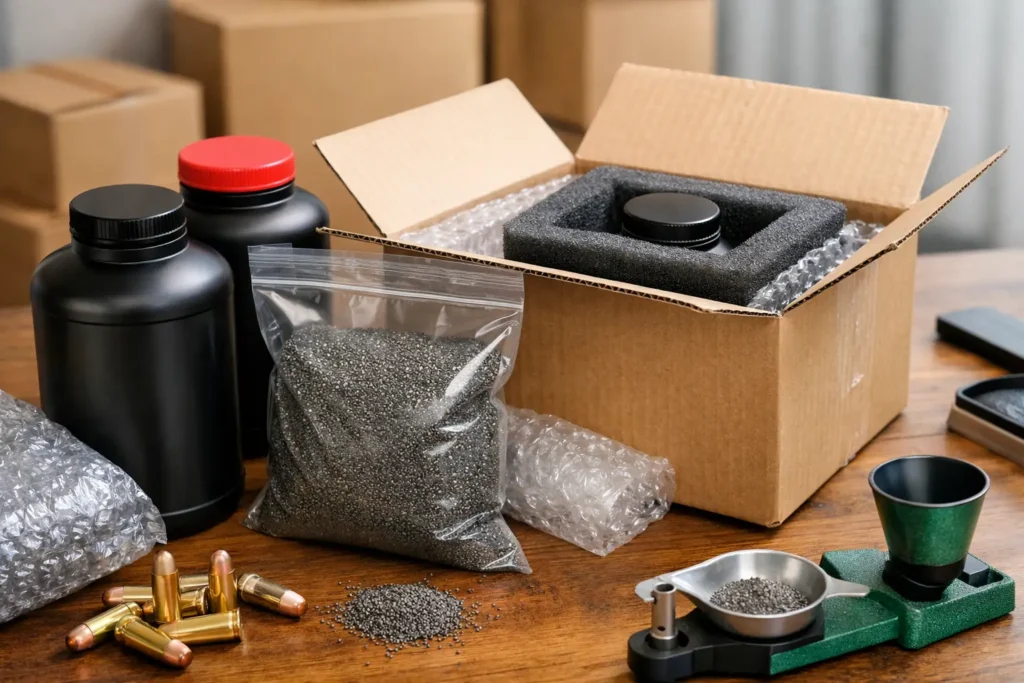
A one-pound canister of smokeless powder may look like an ordinary reloading component on the bench, but the moment it enters a shipping network, it is handled under a different set of expectations. So, can powder be shipped safely? Yes, when the seller, carrier, packaging, and receiver all follow the applicable dangerous-goods requirements. Safety is not a promise made by a label alone. It is the result of controlled handling from inventory shelf to delivery.
For reloaders, that matters because powder availability is only useful if the product arrives authentic, dry, undamaged, and suitable for dependable loading. The goal is not simply to move a package quickly. It is to protect component integrity while meeting the rules that govern transportation.
Can Powder Be Shipped Safely Under Carrier Rules?
Smokeless powder is regulated for transport. Its shipping classification, quantity limits, packaging requirements, documentation, and carrier acceptance rules can vary by product, destination, and mode of transport. That means a reputable retailer does not treat a powder order like a box of dies or cleaning patches.
The practical answer is that powder can be shipped safely through a carrier authorized to accept it, using the required packaging and markings. However, not every carrier service accepts every regulated material, and not every route or delivery option is available. Ground service may be required where air transport is restricted. Remote-area delivery may also involve different timing or carrier availability.
For Canadian orders, compliance with applicable transportation requirements is part of the transaction, not an optional extra. A serious supplier verifies what can be shipped, how it must be prepared, and where it can be delivered before it leaves the facility. That work protects the buyer, the carrier, and everyone handling the shipment.
What Safe Powder Shipping Looks Like
Safe shipping begins long before a shipping label is printed. It starts with intact, manufacturer-sealed containers stored correctly and selected carefully for the order. The original container is designed to identify the powder, preserve its condition, and provide the warnings and information reloaders need at the bench.
A properly prepared shipment uses packaging appropriate to the product and transport requirements. The package must protect the canisters from crushing, puncture, excessive movement, and moisture exposure during normal handling. Interior protection matters as much as the outside carton. A canister should not be free to shift against other items in transit.
The outer package may also require specific dangerous-goods marks or documentation. Those details are not cosmetic. They communicate handling information to the carrier and help ensure the parcel stays within an approved transportation stream. Shipping staff need training, and the carrier needs to know what it has accepted.
A reliable retailer also separates products when necessary. Smokeless powder, primers, loaded ammunition, firearms, and general merchandise do not automatically share the same shipping treatment. Combining items for convenience can be restricted or impractical depending on their classifications and the carrier’s policies. When an order is divided into separate packages, that is often a compliance and safety decision rather than a fulfillment mistake.
Why Original Packaging Is Non-Negotiable
Reloaders know that powder identification is critical. Similar-looking propellants can produce very different pressures and velocities, and the container label carries the information needed to keep loading data matched to the exact product. Shipping powder in unmarked containers, reused food jars, bags, or improvised bottles is unsafe and unacceptable.
Original packaging provides three essential controls: positive identification, a container intended for the product, and traceability through lot information. If a package is damaged in transit or a question arises about a product, those details matter.
Once powder is delivered, keep it in its original container. Do not consolidate partial containers, transfer powder into a different canister, or rely on memory and appearance to identify a propellant. The fastest way to create a dangerous bench error is to lose certainty about what is in the container.
The Buyer’s Role Before Delivery
The retailer and carrier carry major compliance responsibilities, but the receiver has an important role as well. Start by confirming that the shipping address is accurate, deliverable, and suitable for receiving a regulated package. Avoid addresses where parcels routinely sit outdoors, are exposed to severe heat or moisture, or may be handled by unauthorized people.
Be prepared to receive the shipment promptly. Powder should not be left on a porch, in a mailbox, or in a hot vehicle longer than necessary. If a signature, age verification, or other delivery control applies, make arrangements ahead of time rather than assuming the carrier can leave the parcel.
When the package arrives, inspect the exterior before opening it. A scuffed carton is not necessarily a problem, but visible crushing, wetness, chemical odor, leaking contents, or a compromised container deserves immediate attention. Do not use a damaged powder container. Keep the package away from heat sources and contact the seller or carrier for instructions based on the situation.
Do not attempt to return powder through a standard parcel counter or ship it back on your own without explicit direction. Returns of regulated materials require the same care and compliance as the original outbound shipment.
Delivery Speed Matters, but Handling Matters More
Reloaders understandably want in-stock powder dispatched quickly, especially when a proven load depends on a specific propellant. Fast fulfillment is valuable, but it should never mean bypassing the controls required for regulated products.
A short delay can occur when an order needs a compatible carrier service, a shipping restriction must be verified, weather interrupts a route, or a destination falls outside a standard delivery lane. Those situations can be frustrating, yet they are preferable to forcing a package into an unsuitable service.
The best purchasing decision is to order from a specialist that understands powder as a performance component and a regulated shipment. Inventory accuracy, secure payment, appropriate packaging, and disciplined carrier selection all support the same outcome: the correct product arriving in condition for safe, consistent reloading.
Storage After the Package Arrives
Shipping safety does not end at the doorstep. Move powder into a cool, dry storage area away from open flames, ignition sources, direct sunlight, and areas accessible to children or unauthorized persons. Follow the manufacturer’s storage guidance and any local requirements that apply to your location.
Keep powder away from primers and other materials according to applicable rules and sensible bench organization. Avoid storing it in a sealed improvised container or any place where a fire could turn ordinary storage into a pressure hazard. The manufacturer container is part of the safety system, not disposable packaging.
Before loading, inspect the label, verify the powder against your published load data, and work from the exact product name shown on the container. A shipment that arrives safely still demands disciplined component handling at the bench.
Questions Reloaders Should Ask a Powder Seller
Before placing an order, confirm whether the retailer ships powder to your destination and which delivery restrictions may apply. Ask whether the product is in stock now, whether the order may be split, and whether a shipping surcharge or specialized service is required. These are normal questions for regulated components, not signs that something is wrong.
It is also reasonable to expect clear communication if a carrier cannot serve an address or if an order needs adjustment. Lee Reloading Canada approaches powder fulfillment with the same priorities reloaders bring to their load development: correct components, controlled process, and no guesswork where safety is concerned.
Powder can move safely through the shipping network when it is handled by people and systems built for the job. Choose the exact propellant your load requires, receive it promptly, keep it in its labeled container, and give its storage the same attention you give every charge you throw.