
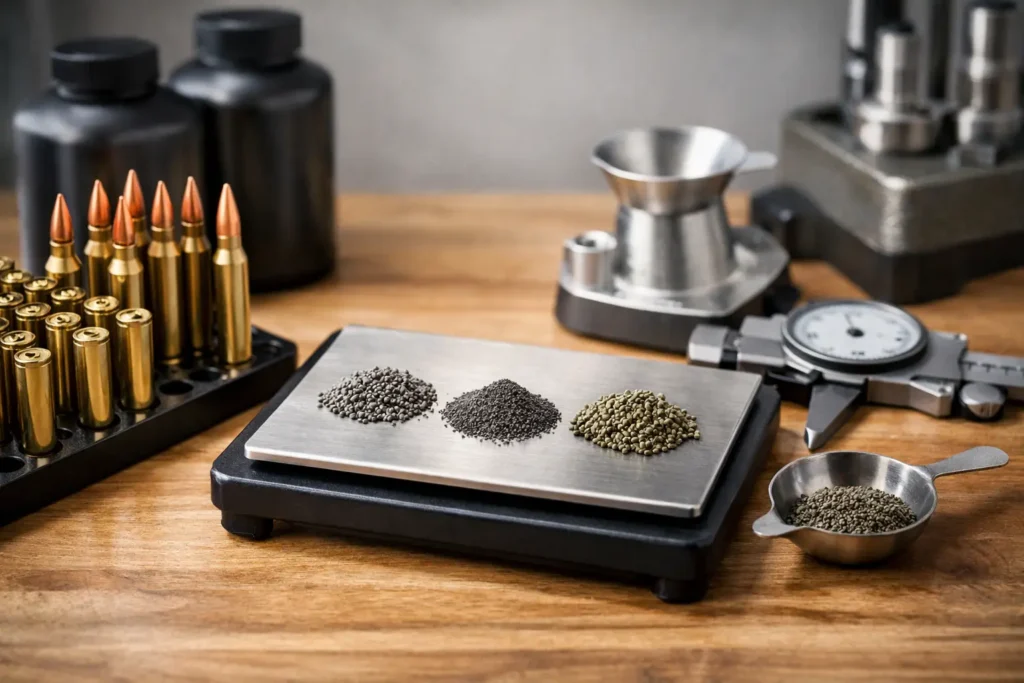
A charge that looks efficient on paper can perform very differently at the bench or in the field. Two powders may sit close together on a burn-rate chart, produce similar published velocities, and still show meaningful differences in case fill, metering, temperature response, and pressure behavior. Knowing how to compare powder loads means looking beyond a single charge weight and judging the complete load system.
For serious reloaders, the goal is not simply to find the fastest option. It is to select a powder and charge range that delivers safe pressure, dependable ignition, repeatable velocity, and the accuracy your rifle, pistol, or shotgun can hold. That comparison begins with current, component-specific published data and ends with careful records from your own firearm.
How to Compare Powder Loads Without Guesswork
Start by defining what you need the load to do. A precision rifle load, a high-volume pistol practice load, and a hunting load carried through changing weather do not have identical priorities. One shooter may accept lower velocity for smaller extreme spreads. Another may prioritize clean metering through a progressive press. A hunter may value stable performance across temperature swings over a small gain in muzzle velocity.
Compare powders only within the correct cartridge, bullet weight range, and application. Published load data is built around specific bullets, cases, primers, barrel lengths, and test methods. Changing any one of those variables can change the result. A load listing is not a general recipe for powders of a similar type, nor is it permission to substitute one component for another.
The safest and most useful comparison is between current published data from reputable powder manufacturers and loading manuals, using the exact powder designation. Then, test methodically in your own firearm while staying within published limits.
Start With Pressure Data, Not Charge Weight
Charge weight is the number reloaders notice first, but grains alone do not tell you which load is milder, faster, cleaner, or better suited to your firearm. A heavier charge of a slower powder can produce less pressure than a lighter charge of a faster powder. Powder chemistry, grain geometry, case capacity, bullet seating depth, and primer choice all affect the pressure curve.
When reviewing data, compare the stated starting charge and maximum charge for the same bullet weight and construction whenever possible. Look at the listed pressure, velocity, and test barrel details. This gives you a more meaningful view of the operating range than charge weight by itself.
Do not assume two powders with similar maximum velocity are interchangeable. Their pressure curves may be very different. One may reach useful velocity with excellent case fill and moderate pressure, while another may produce similar velocity only near the top of its published range. The latter is not automatically a poor choice, but it may offer less flexibility for changes in ambient temperature, case capacity, or component lot variation.
Why component matching matters
Keep the comparison controlled. If you change powder, bullet, primer, brass brand, and seating depth at once, you cannot identify what caused a change in velocity or group size. Use the same bullet type, similar prepared cases, the same primer class, and the same cartridge overall length when comparing suitable published recipes.
Primer selection deserves particular attention. A standard primer and a magnum primer can produce different ignition characteristics, especially with larger powder charges or certain slow-burning propellants. Use the primer specified in the published data unless a reputable source provides tested data for the exact substitution. Reliable ignition is part of load performance, not an afterthought.
Compare Burn Rate and Case Fill Together
Burn-rate charts are useful screening tools. They help narrow a large powder selection to options appropriate for a cartridge and bullet weight. They do not replace tested load data. Burn rate is relative, not a fixed measurement of pressure or velocity, and neighboring powders can behave differently depending on the cartridge.
Once you have identified powders supported by current data, compare how they fill the case across the published charge range. Case fill can influence ignition consistency, loading density, powder positioning, and your ability to detect an accidental overcharge. A load with appropriate loading density is often easier to produce consistently than one that leaves excessive empty space, though the right choice still depends on the cartridge and the published data.
Compressed loads require special care. If a manual lists a compressed charge, follow that exact tested data and confirm that your seating depth, brass capacity, and bullet design match the listed conditions. Never force a charge into a case simply because a powder is listed for the cartridge.
Powder form also matters when comparing loads for production volume. Ball powders often meter very consistently by volume, which can be valuable on progressive equipment. Extruded powders may offer excellent performance in many rifle applications but can require more deliberate measuring, depending on grain length and the powder measure. Flake powders may be well suited to many pistol and shotshell applications, yet their bulk density and metering characteristics vary by product.
Use Velocity Data the Right Way
Velocity is valuable, but a single chronograph reading proves very little. Compare average velocity from multiple shots, then consider standard deviation and extreme spread alongside group size and point of impact. A powder that delivers the highest average speed may not be the powder that gives the best practical result.
For a controlled comparison, load small test batches using published starting data and work upward only according to established published procedures. Inspect cases and primers, watch for changes in bolt lift or extraction where applicable, and stop immediately if you see any pressure signs. Visible pressure signs are not a substitute for tested pressure data, and their absence does not confirm that a load is safe.
Record environmental conditions during testing. Temperature, wind, barrel condition, and even the time between shots can affect results. This is especially relevant when evaluating loads intended for hunting, competition, or use across multiple seasons.
A useful comparison record should include at least these details:
- Powder brand, exact product name, and lot number
- Charge weight and the measurement method used
- Bullet, primer, case brand, and case preparation details
- Cartridge overall length and any relevant seating-depth notes
- Average velocity, standard deviation, and extreme spread
- Group size, point of impact, temperature, and observed function
These notes turn a range session into usable loading data. Without them, it is easy to remember the one impressive group and overlook the inconsistency that showed up across the rest of the string.
Account for Lot Variation and Temperature Performance
Powder lots are manufactured to tight standards, but no reloader should assume a new lot will perform exactly like the previous one. When you open a different lot, treat it as a fresh verification point. Confirm performance with your established load record rather than immediately loading a large batch at the former charge weight.
Temperature stability is another practical difference between powders. If ammunition will be used in hot vehicles, cold blinds, long firing strings, or major seasonal changes, test the load under conditions that reflect its real purpose when possible. A load that groups well on a mild range day may not maintain the same velocity or point of impact in substantially different temperatures.
This does not mean every load requires extreme-condition testing. It means the level of testing should match the consequence of variation. A casual range load and a once-in-a-season hunting load deserve different levels of verification.
Avoid the Most Common Comparison Errors
The most costly mistake is treating a burn-rate chart as substitution data. Powders are not interchangeable because their names, granulation, or chart position appear similar. Use only current, tested data for the exact powder and components in front of you.
Another mistake is chasing maximum velocity before establishing consistency. Maximum charges leave less margin for normal variation in brass capacity, temperature, scale technique, and component lots. Often, the most dependable load sits below the published maximum and provides better accuracy, easier extraction, and more repeatable velocity.
Finally, do not compare results from different sessions as if every condition were identical. A fouled barrel, different brass, a changed optic setting, or a different shooting position can distort the result. Control what you can, document what you cannot, and let repeatable data make the decision.
The right powder load is the one that meets your performance goal with a margin for safe, repeatable operation. Build your comparison around tested data, disciplined component control, and clear range records, then keep a dependable supply of the exact powder and primer combination that earned its place on your bench.