
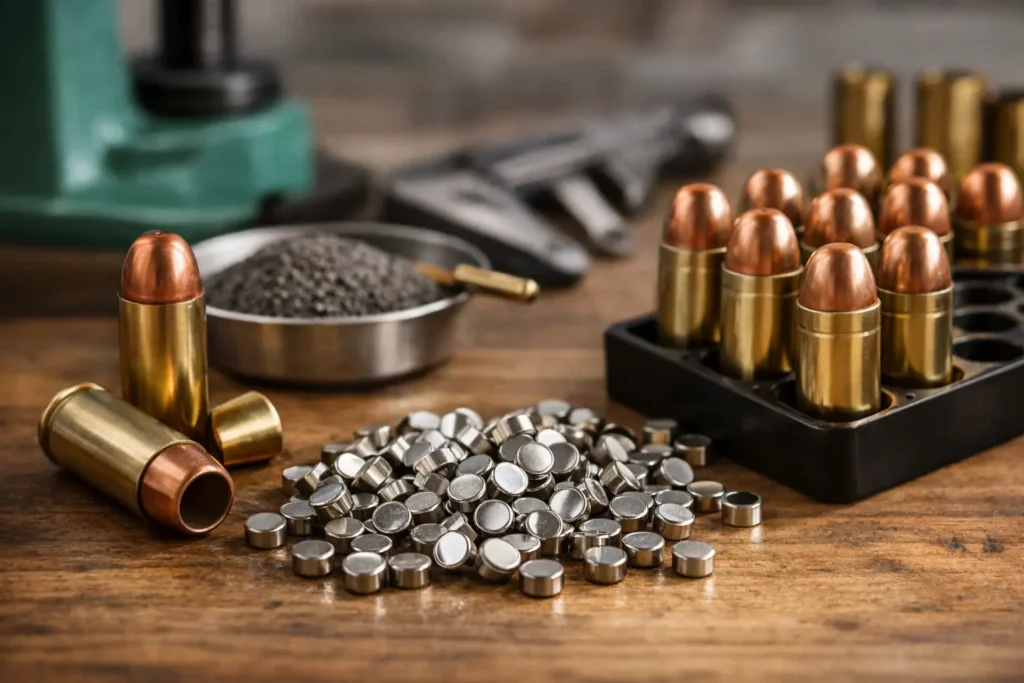
A primer that seats easily is not necessarily the right primer for the case. Understanding large pistol primer uses starts with matching the primer pocket, cartridge, and published load data before a round ever reaches the range. For handloaders who expect consistent ignition and repeatable field performance, this small component deserves the same attention given to powder, brass, and bullets.
What Large Pistol Primers Do
A large pistol primer provides the initial spark that ignites the powder charge in centerfire handgun ammunition built with a large pistol primer pocket. It is designed for handgun cartridges and operates with cup construction and sensitivity suited to typical pistol pressures and firing systems.
Its job is simple in principle: deliver dependable ignition. In practice, primer choice can influence how consistently a load performs, particularly when brass, powder type, temperature, firearm configuration, and load data all come into play. The goal is not to chase a primer that is universally “best.” The goal is to use the exact primer class called for by reliable, current published data.
Large pistol primers are generally associated with larger-capacity revolver cartridges and several classic autoloading pistol cartridges. They are also available in standard and magnum versions. Those versions are not automatic substitutes for one another, even when both fit the same primer pocket.
Large Pistol Primer Uses by Cartridge Type
The most common large pistol primer use is loading cartridges manufactured with large pistol primer pockets. Familiar examples include many .45 ACP cases, .45 Colt, .44 Special, .44 Magnum, .454 Casull, and .480 Ruger cases. Some other handgun cartridges may appear with either large or small primer pockets depending on the brass manufacturer, production era, or non-toxic factory ammunition design.
That last point matters. Cartridge name alone does not always identify the correct primer. Inspect the actual case and sort brass carefully before priming. A mixed lot of .45 ACP brass, for example, can contain both large-primer and small-primer cases. Trying to force a large pistol primer into a small pocket can damage the primer, the case, or the priming tool. A small primer in a large pocket will not provide the proper fit or reliable retention.
Traditional Large-Primer Handgun Cartridges
Large pistol primers remain a standard choice for many revolver cartridges because those cartridges often use cases with larger primer pockets and, in some applications, greater powder capacity. A standard large pistol primer is commonly specified for routine loads where the published data calls for it.
For cartridges such as .45 Colt and .44 Special, case capacity can vary substantially with brass construction and bullet selection. That makes strict adherence to tested data particularly valuable. Primer selection is part of the complete load specification, not an isolated decision made after the powder and bullet are chosen.
Magnum revolver cartridges may use large pistol magnum primers when the manual specifically calls for them. A magnum primer can produce a different ignition characteristic than a standard primer. Whether that is appropriate depends on the tested combination, especially the powder selected. Do not assume that a magnum cartridge always requires a magnum primer, or that a magnum primer automatically improves performance.
Mixed Primer-Pocket Brass
Modern brass sorting is one of the most practical large pistol primer uses to understand. Certain cartridge families have been produced with different pocket sizes, particularly where manufacturers use small primers in some factory loads. Visual inspection helps, but a dedicated sorting routine is more dependable when processing range brass in volume.
Keep large-pistol and small-pistol cases separated, labeled, and stored in distinct containers. This reduces interruptions at the loading bench and helps prevent a mismatched primer from reaching the priming stage. For high-volume shooters, consistent brass segregation is as much about efficiency as it is about safety.
Standard vs. Magnum Large Pistol Primers
The choice between standard and magnum large pistol primers should come directly from published load data. Magnum primers are not simply a higher-performance option. They are a different component with a different ignition profile.
Some powder and cartridge combinations benefit from the ignition characteristics specified by a magnum primer. Other combinations are designed and tested with standard primers. Changing between them can alter the behavior of a load, which is why responsible reloaders treat a primer switch as a component change and return to appropriate published starting data.
Brand variation matters as well. Primers from respected manufacturers are produced to exacting standards, but they are not necessarily interchangeable in every load without retesting. If a load was developed with one primer line and availability requires a change, use current data for the new component whenever possible. Reliable ignition begins with consistency, not assumptions.
Large Pistol Primers Are Not Large Rifle Primers
Large pistol and large rifle primers may appear similar at a glance, but they are different components. They are built for different cartridge classes and are not interchangeable. Rifle primers use a different cup configuration and height, while pistol primers are intended for the pocket dimensions and firing characteristics of handgun cases.
A large rifle primer should never be substituted into a large pistol primer pocket simply because the diameter appears close. Improper fit can create seating and ignition problems. The same principle applies across primer categories: small pistol, small rifle, large pistol, large rifle, shotshell, and 50 BMG primers each serve a specific purpose.
For dependable handloads, match the primer designation printed in the load manual to the primer pocket in your brass. That discipline avoids one of the most preventable errors at the bench.
Consistency Practices That Protect Performance
Primer performance starts before seating. Inspect cases for clean, undamaged primer pockets and confirm that each case is the correct cartridge and primer-pocket type. Primer pockets that are loose, excessively worn, or compromised should be removed from service rather than forced into a loading cycle.
Seat primers with a tool that gives you consistent feel and control. A properly seated primer should be fully seated according to established reloading practice, without crushing or deforming the cup. If seating feels unusually difficult or unusually loose, stop and inspect the case instead of trying to power through the issue.
Store primers in their original packaging, in a cool, dry location away from open flame, excessive heat, and unnecessary handling. Keep product lots organized when practical. Using one lot for a carefully developed load can make troubleshooting easier if performance changes later.
Questions Reloaders Ask About Large Pistol Primers
Can I use large pistol primers in every .45 ACP case?
No. While many .45 ACP cases use large pistol primer pockets, some brass is produced with small pistol primer pockets. Check each case rather than relying only on the headstamp or cartridge name.
Can I replace a standard large pistol primer with a magnum primer?
Only when current published data supports that exact component combination. A primer substitution can change ignition and overall load behavior, so it should never be treated as a casual swap.
Why does a primer not seat correctly?
The most common causes are a mismatched primer pocket, debris in the pocket, a damaged case, or an incorrect primer type. Stop, identify the cause, and correct it before continuing. Do not force primers into place.
Are premium primers worth choosing?
For reloaders who value repeatable results, dependable manufacturing and consistent availability matter. A quality primer from a trusted manufacturer supports the reliability of the complete load, especially when you maintain disciplined brass sorting and follow tested data.
The best use for a large pistol primer is the one it was designed for: the correct pocket, the correct published load, and a carefully prepared case. That approach keeps every handload centered on what matters most – reliable ignition, predictable performance, and confidence when it counts.
