
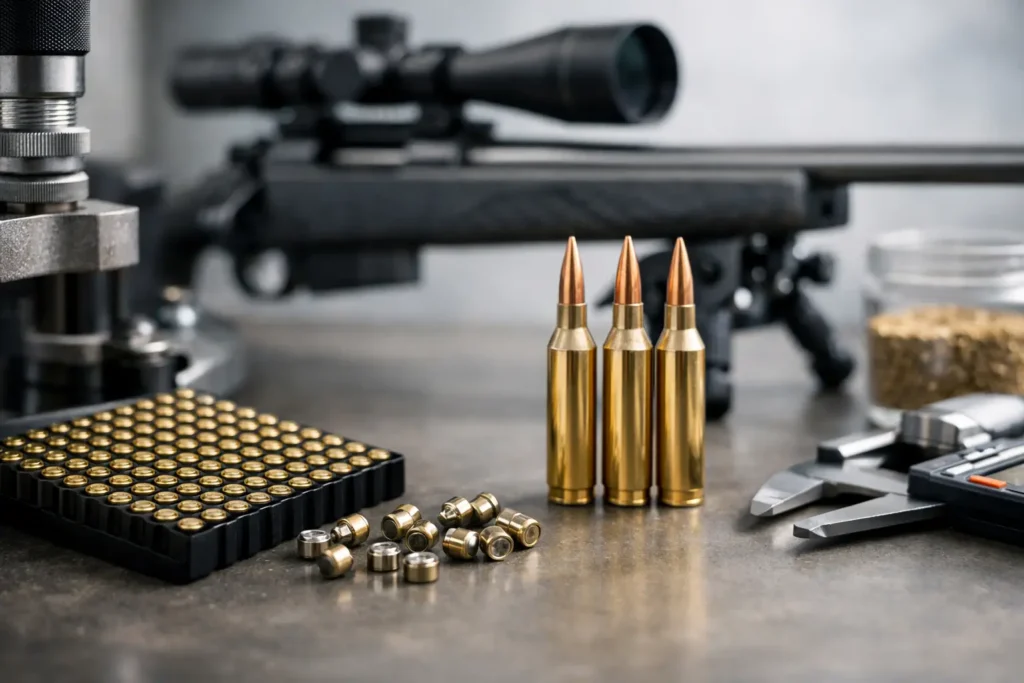
A precision rifle load can look perfect on paper and still miss its potential because of one small component – the primer. When reloaders ask about the best primers for precision rifle performance, they are usually chasing one thing: lower variation shot to shot without giving up reliable ignition under real conditions.
That is where primer choice stops being a checkbox and starts becoming part of load development. Powder charge, bullet seating depth, neck tension, brass prep, and barrel quality still carry more weight overall, but primers absolutely influence ignition behavior, pressure shape, and consistency. For experienced reloaders, the right primer is not simply the hottest option or the most expensive one. It is the one that matches the cartridge, powder, firing pin energy, and intended use.
What makes the best primers for precision rifle loads?
The best primers for precision rifle loads tend to share three traits: consistent ignition, tight manufacturing tolerances, and appropriate cup characteristics for the application. That sounds simple, but the details matter.
Consistency is the first filter. A primer that varies less in brisance and ignition timing can help reduce velocity spread, especially in carefully tuned loads. That does not guarantee a smaller group every time, but it often supports the kind of repeatability precision shooters want from lot to lot and across different temperatures.
Cup strength matters more than many reloaders admit. A softer cup may ignite easily with lighter firing pin strikes, but in some rifles it can flatten earlier or show pressure signs sooner. A harder cup can offer a better fit for higher-pressure rifle loads or rifles with more energetic firing systems. Neither is universally better. It depends on the cartridge and the rifle.
Then there is primer intensity. A hotter primer may help ignite ball powders or larger charges more uniformly. At the same time, that extra energy can shift pressure and velocity enough to change a previously stable node. A milder primer can sometimes tighten an already well-balanced extruded powder load. This is why changing primers is not a minor adjustment. It is a component change that deserves a fresh workup.
Match the primer to the cartridge, not the label
Precision rifle shooters often gravitate toward so-called match primers, and for good reason. Match-grade lines are generally built around tighter quality control, with a focus on ignition uniformity. In many rifles, that can translate into lower standard deviation and better vertical consistency at distance.
Still, the word match is not magic. Some standard primers shoot exceptionally well in precision applications, while some match primers offer little to no advantage in a given load. If you are loading .223 Remington for a bolt gun, your best result may come from a small rifle primer with a cup that suits your firing pin and pressure range. If you are loading .308 Winchester, 6.5 Creedmoor, or .30-06, a large rifle primer that pairs well with your chosen powder may matter more than branding.
This is especially true when comparing extruded versus spherical powders. Extruded powders often light easily and may perform best with a less aggressive primer. Spherical powders can benefit from a stronger initial flame. The primer is doing a job inside a very specific system, not in isolation.
Small rifle vs. large rifle in precision applications
Small rifle and large rifle primers are not interchangeable decisions. They are dictated by the cartridge case design, but the precision considerations around them are worth separating.
Small rifle primer cartridges, including many .223 Remington and some modern precision-oriented cases, can deliver excellent consistency. In some setups, reloaders like the pressure behavior and ignition characteristics they see with small rifle systems. The trade-off is that primer cup selection becomes more important, especially in higher-pressure loads or with semiautomatic rifles.
Large rifle primer cartridges remain the standard for many classic precision rounds. They offer broad component availability and proven compatibility with powders commonly used in long-range shooting. For cartridges like .308 Winchester and 6.5 Creedmoor with large primer brass, the decision usually comes down to standard versus magnum and match versus standard, rather than primer size.
If your brass dictates one size, your real tuning decision is usually cup hardness, primer intensity, and brand-to-brand consistency.
Standard, magnum, and match primers
This is where many reloaders overcomplicate the issue.
Standard rifle primers are often the right place to start for moderate-capacity cases and extruded powders. They can produce excellent precision when the powder ignites easily and the load is already in a stable accuracy node. Many well-proven precision loads use standard primers and never need anything more.
Magnum rifle primers are not only for magnum cartridges. They are often useful when you need a stronger, more consistent ignition event – especially with slower powders, larger powder charges, spherical powders, or cold-weather use. That said, they can also change pressure noticeably. If your load was already near the top end, a magnum primer can push it into a less forgiving range quickly.
Match primers are built for shooters who care about uniformity first. They are often the best place to look when you have already refined brass prep, seating depth, and powder charge and want to tighten the final variables. But they are not a shortcut. If the rest of the load is inconsistent, a match primer will not rescue it.
Brand reputation matters, but lot testing matters more
Experienced reloaders know the major primer names because they have earned trust over time. Federal, CCI, Winchester, and Remington all have loyal followings, and match-specific options often become favorites in precision circles for good reasons tied to consistency and field results.
But even within respected brands, different primer lines behave differently. One rifle may show lower extreme spread with a Federal match primer, while another prints tighter groups with a CCI option. Winchester primers may provide exactly the ignition profile a certain powder charge likes. There is no universal winner that overrides real testing.
That is why the best approach is comparative, not theoretical. If you can test two or three appropriate primers with the same brass, bullet, powder, seating depth, and environmental conditions, the target and chronograph will usually tell the truth faster than internet consensus will.
How to test primers the right way
Primer testing only helps if you control the rest of the variables. Change one thing at a time. Keep brass from the same lot, prep it the same way, and maintain the same powder charge and seating depth. Then shoot enough rounds to reveal a pattern instead of reacting to one promising group.
A useful precision test looks at more than group size. Pay attention to average velocity, standard deviation, extreme spread, and vertical dispersion at distance. Some primers will produce nearly identical 100-yard groups but separate clearly once you stretch the rifle farther out.
Also watch pressure signs carefully. Primer swaps can raise pressure before the load looks dramatically different on paper. Flattening, cratering, sticky bolt lift, or velocity jumps should stop the test immediately. Reliable ignition every time is part of precision, but safe pressure behavior is non-negotiable.
Availability is part of the decision
There is another practical point reloaders should not ignore: the best primer is one you can source with confidence and repeatability. Building a precision load around a hard-to-find primer can be frustrating if you cannot maintain that setup over time.
This is where a specialized supplier matters. For reloaders who want trusted inventory from established brands, a focused source like Lee Reloading Canada makes more sense than chasing random availability. Precision work depends on component consistency, and that starts before the loading bench.
If you find a primer that gives you the velocity spread, pressure behavior, and downrange performance you want, buying enough from the same lot when possible is usually the smart move.
The real answer to the best primers for precision rifle use
The best primers for precision rifle use are the ones that give your rifle a clean, repeatable ignition cycle with the powder and cartridge you actually shoot. That may be a standard primer in a well-tuned .308 load, a match primer in a 6.5 Creedmoor competition setup, or a magnum primer for a larger case running a harder-to-light powder in cold weather.
Precision reloaders tend to get the best results when they stop looking for universal answers and start building cartridge-specific ones. Start with a proven primer type for your case and powder, test carefully, and let consistency decide. When every variable matters, the smallest component still deserves serious attention.
A good primer does not make noise on the bench, but you will notice it where it counts – in the kind of shot-to-shot confidence that keeps groups honest and dope predictable.