
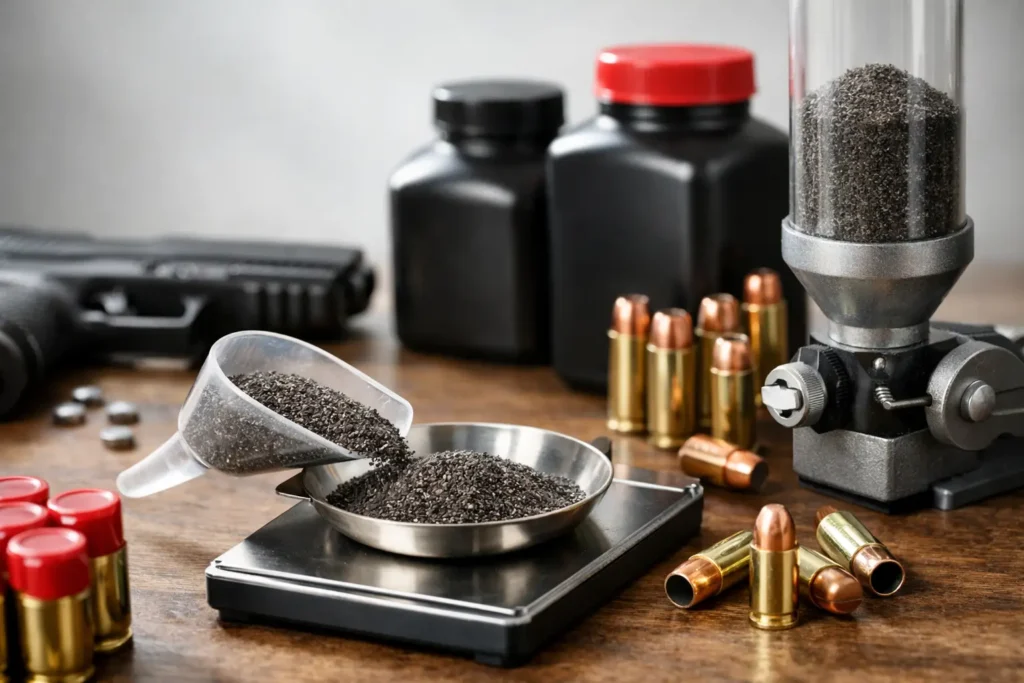
A pistol that runs clean over a long practice session usually starts with one decision at the bench: the right clean burning pistol powder for the cartridge, bullet, and velocity window you are actually loading for. Most reloaders learn quickly that “clean” is not a marketing adjective by itself. It shows up as less soot on the case, less residue in the action, more consistent cycling, and fewer surprises when you inspect your firearm after a few hundred rounds.
That said, clean burning is never the only goal. A powder can leave very little fouling and still be a poor fit if it meters inconsistently, produces sharp pressure behavior in your load range, or fails to cycle your pistol with authority. Good handgun loading is always a balancing act between cleanliness, reliability, accuracy, recoil characteristics, and component compatibility.
What clean burning pistol powder really means
When experienced reloaders talk about clean burning pistol powder, they are usually talking about practical evidence, not theory. They mean powder that burns efficiently at the pressure levels of the cartridge, leaves less visible residue, and keeps carbon buildup more manageable through normal round counts.
The important phrase there is “at the pressure levels of the cartridge.” Many handgun powders look cleaner when loaded near the middle to upper end of published data and noticeably dirtier when downloaded. That is one reason opinions about the same powder can vary so much. A powder that seems excellent in 9mm at standard service-level performance may feel far less impressive in a soft .38 Special target load.
Primer choice, bullet weight, seating depth, crimp, and firearm design all affect what you see on the gun and brass. Blowback pistols, revolvers with cylinder gap residue, and compensated setups can each make a powder appear cleaner or dirtier than it would in another platform. So the right question is not “What is the cleanest pistol powder?” It is “What burns cleanly and consistently in my application?”
Why powder cleanliness matters beyond appearance
Most serious reloaders do not care about a spotless slide just for cosmetic reasons. Cleaner-burning powders can reduce maintenance frequency, especially for high-volume range use. They can also make it easier to track pressure signs and diagnose performance issues because excessive soot or unburned granules are not clouding the picture.
In practical terms, cleaner loads often support more predictable function over longer strings. That matters in training, competition, and any session where you want your pistol to behave the same at round 20 as it does at round 220. Less residue around the chamber, feed ramp, breech face, and extractor area does not eliminate stoppages, but it can reduce one variable.
There is also the brass side of the equation. Loads that seal the chamber well and burn efficiently often leave cases less sooty, which makes post-range sorting and inspection easier. If you process a lot of handgun brass, that is not a trivial benefit.
Burn rate and pressure window decide a lot
A fast powder is not automatically cleaner, and a slower powder is not automatically dirtier. What matters is whether the burn rate matches the cartridge and intended load intensity. In many common pistol cartridges, especially 9mm, .40 S&W, .45 ACP, and .38 Special, powders in the fast to medium-fast range often provide the balance reloaders want. They can meter well, ignite reliably, and reach efficient combustion in typical handgun barrel lengths.
But every gain comes with a trade-off. Faster powders can be economical and soft-shooting in some loads, yet they may have a narrower margin between a mild target load and an upper-pressure load. Medium-rate powders may feel more flexible across bullet weights and can sometimes deliver cleaner performance when you need enough pressure to get them working as intended.
This is why published load data matters so much. If a powder’s best behavior appears in the upper half of the data range and you want a very soft minor-power load, it may not be your best option no matter how often it is described as clean.
Common powder families reloaders look at
Reloaders chasing cleaner handgun performance usually end up comparing proven names from Hodgdon, Winchester, Alliant, Ramshot, Accurate, Vihtavuori, and Shooters World. That makes sense because these lines cover most practical handgun applications and have long-established data support.
Some powders build a reputation for clean results because they meter exceptionally well and perform consistently in service-caliber semi-auto ammunition. Others are favored in softer target loads where low flash, mild recoil impulse, and residue control matter just as much as raw velocity. Vihtavuori, for example, often gets attention from reloaders who prioritize consistency and refined shooting characteristics, while Hodgdon, Winchester, Alliant, Ramshot, and Accurate all have well-known options that can produce excellent results when matched correctly.
The brand matters less than the fit. A powder that is outstanding in .45 ACP with a 230-grain bullet may be merely average in 9mm with a lighter projectile. Likewise, one powder may leave very little residue in a striker-fired pistol but show more visible soot in a revolver due to platform differences.
How to evaluate clean burning pistol powder in your own loads
The smart approach is controlled comparison, not guesswork. If you are testing powders for cleanliness, keep as many variables fixed as possible. Use the same brass lot, bullet style, primer type, overall length, and firearm. Then compare function, group quality, chronograph consistency if available, and residue pattern after meaningful round counts.
Do not judge a powder after one magazine. Some loads look fine for 20 rounds and show their true fouling pattern after 150. Watch the breech face, feed ramp, barrel hood, muzzle area, and case exterior. Pay attention to whether the firearm still feels the same deep into the session. A powder that stays stable and manageable as heat and residue build is usually doing something right.
It also helps to separate “dirty powder” from “dirty load.” An underpowered load, weak case seal, mismatched primer, or poor bullet fit can make a good powder look worse than it is. If the brass comes out heavily sooted but the load is on the low side, the answer may be a different charge window rather than a different powder.
Metering, flash, and recoil still matter
Cleanliness should not overshadow the other characteristics that make handgun ammunition perform well. Metering is a major one. A powder that burns clean but throws inconsistent charges through your measure creates a different problem, especially when you are loading volume.
Flash matters too, particularly for defensive-style practice, indoor ranges, or shorter barrels. Some powders are known for lower flash signatures, and that can be more valuable than a slight edge in visible cleanliness. Recoil impulse is another factor. Two powders can produce similar velocities but feel different in how they cycle the slide and return the sights.
This is where experienced reloaders usually narrow their choices to a few proven options and stay there. The best powder is rarely the one that wins a single category. It is the one that gives reliable ignition, stable metering, clean enough burn, and the kind of shooting behavior you want across hundreds or thousands of rounds.
Safety and consistency come first
Any discussion of clean burning pistol powder has to stay grounded in published data and disciplined process. Chasing a cleaner burn by increasing a charge beyond tested data is not load development. It is a safety mistake. The same goes for swapping primers, changing bullet construction, or altering seating depth without understanding the pressure impact.
Handgun cartridges can respond quickly to component changes, especially in compact cases with fast-burning powders. If your current load is dirtier than expected, start with the fundamentals. Verify your data source, confirm your charge accuracy, inspect brass condition, and make sure your firearm is mechanically sound.
Reliable ignition and safe pressure are the baseline. Cleanliness is valuable, but only after the load is already correct.
Finding the right supply matters too
For many reloaders, the practical challenge is not just selecting the right powder. It is finding trusted powder lines in stock when they need them. Consistency at the bench depends on consistency in component supply, and that is one reason specialized retailers matter. A focused source like Lee Reloading Canada makes that process easier for reloaders who already know the brands and burn-rate range they trust.
If you are trying to refine a handgun load, think in terms of fit rather than hype. Match the powder to the cartridge, bullet, and performance window. Test it honestly in your firearm. When a load runs clean, meters predictably, and cycles with authority, you are not just saving cleanup time – you are building a more dependable round from the ground up.
The best choice is usually the powder that lets you stop thinking about the powder and start paying attention to your shooting.