
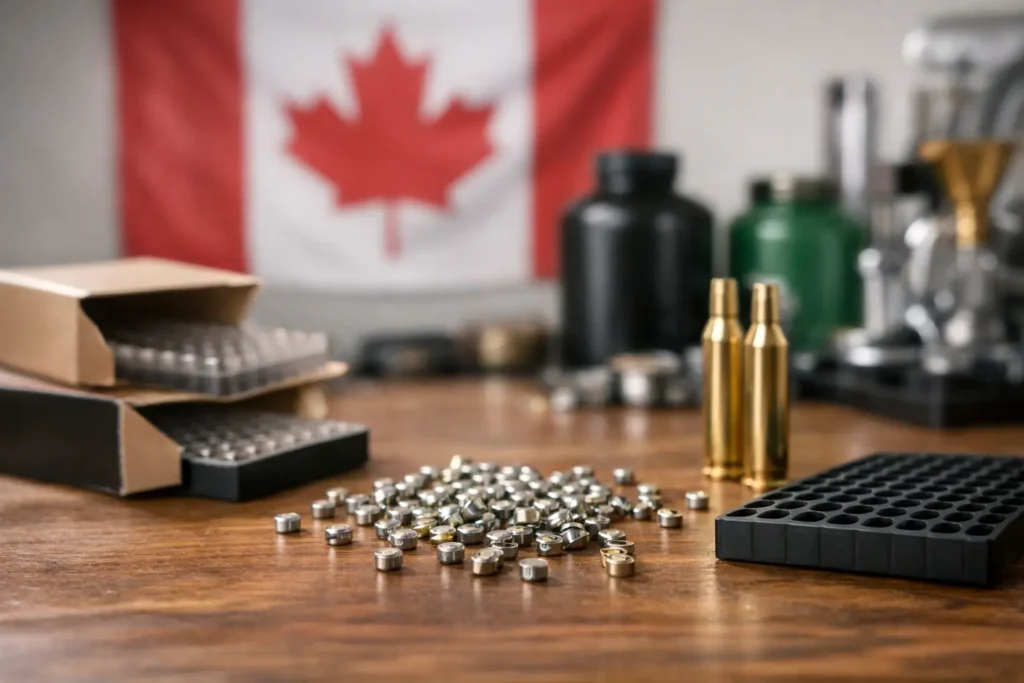
A primer shortage changes the reloading bench long before it stops production. When the correct primer class disappears, a proven rifle or pistol load may need to wait, even when brass, bullets, and powder are on hand. For reloaders dealing with primer shortages in Canada, the advantage goes to those who plan by application, watch inventory closely, and refuse substitutions that compromise safe, repeatable performance.
The goal is not to panic-buy every box that appears. It is to maintain a practical supply of the primers your established loads actually require, so accuracy, ignition reliability, and field confidence do not depend on a last-minute purchase.
Why Primer Availability Tightens So Quickly
Primers are small components with an outsized effect on the ammunition market. They are needed for factory ammunition as well as handloaded ammunition, and production capacity is finite. When demand rises across hunting, recreational shooting, competition, and ammunition manufacturing, primer inventory can disappear faster than powder, bullets, or brass.
Canadian availability adds another layer. Products must move through import channels, regulated transportation requirements, distributors, and retailers before reaching the reloader. A shipment delay at any point can create a gap on the shelf. That does not always mean primers have stopped being produced. Often, it means available inventory is allocated, in transit, or sold through before the next shipment lands.
Demand is also rarely even across all primer types. Small rifle primers can become difficult to find while large pistol primers remain available. Magnum rifle primers may appear before standard large rifle options. Shotshell and 50 BMG primers follow their own demand patterns. Treating every primer as interchangeable is one of the quickest ways to make poor purchasing decisions during a tight market.
Primer Shortages in Canada Are Not One Shortage
The phrase “primer shortage” can make the market sound uniform. It is not. Each primer class serves a distinct purpose, and availability can shift by category, brand, and packaging size.
A precision rifle shooter loading a cartridge built around small rifle primers has a different need than a handgun shooter using standard small pistol primers. A hunter working with a large-capacity magnum cartridge may require a magnum large rifle primer for reliable ignition in cold conditions. A shotshell reloader needs a primer specified for the exact hull, wad, powder, and charge combination being used.
This distinction matters when inventory appears. Buying a primer merely because it is available may tie up budget and storage space without solving the actual problem at your bench. Start with the cartridges and published loads you shoot most often. Then identify the exact primer type and suitable approved options for each load.
Brand preference matters, too. Primers differ in cup characteristics, brisance, dimensions, and lot-to-lot behavior. A load developed with one primer should not automatically be treated as safe or equivalent with another. Even where a published source lists an alternative, the change deserves the same attention as any component change: review current data, reduce and work up as appropriate, and confirm performance in your own firearm.
Buy for Your Load Plan, Not for the Panic
During scarce periods, disciplined buying is a performance advantage. Build a component plan around what you load and shoot in a normal season, rather than around whatever is being discussed in a forum or posted on social media.
For many reloaders, that begins with identifying a primary load and a backup load for each major use. A deer rifle, match rifle, training pistol, and hunting shotgun may each have different component requirements. If your primary recipe depends on one difficult-to-source primer, a second published load using an available, suitable primer can provide flexibility without asking you to improvise.
That does not mean creating a dozen untested recipes. It means keeping component choices purposeful. Fewer proven loads make it easier to track brass, powder lots, primer lots, velocities, and results on target. Consistency is not only a precision concern. It is a safety practice.
When the correct primer becomes available, purchase what supports your realistic loading schedule and storage capacity, subject to applicable laws and regulations. A reloader who knows that a case of primers supports an entire season of practice and hunting can make a calm decision. A reloader buying without a plan often ends up with mismatched components and no finished ammunition.
What to Check Before Ordering Primers
Online inventory gives reloaders a faster way to locate specialized components, but speed should not replace verification. Before placing an order, confirm the primer class first: small rifle, large rifle, small pistol, large pistol, magnum, shotshell, or 50 BMG. A familiar brand name is not enough if the size or application is wrong.
Next, compare the item against your current load data. Check whether your recipe specifies a standard or magnum primer and whether the listed primer is the same type or an approved alternative. Magnum primers are not simply a stronger version of a standard primer that can be dropped into any load. Their use can affect ignition behavior and pressure, especially with certain powders, cartridge capacities, and environmental conditions.
Also consider the role of the load. A high-volume practice load may offer more room for a carefully researched alternate component than a competition load tuned for a particular velocity spread or a backcountry hunting load that must perform in difficult weather. It depends on the cartridge, powder, firearm, and published data. The standard remains the same: do not guess.
Finally, make sure you can receive and store the order properly. Primers should remain in their original packaging and be stored in a cool, dry location away from heat, flame, and incompatible materials. Follow all manufacturer instructions and applicable regulations. Proper storage protects both component condition and the predictability you expect when loading months later.
Protect Consistency When You Change Lots or Brands
A shortage often forces reloaders to use a new lot number or an alternate primer brand. That is manageable, but it should be treated as a controlled change, not a casual swap.
Keep clear bench records that identify the cartridge, bullet, powder, charge weight, case brand, primer, lot number, overall length, and date loaded. If performance changes, those notes give you a useful starting point. Without them, it becomes difficult to know whether the shift came from the primer, brass capacity, powder lot, seating depth, or another variable.
For rifle loads, watch for velocity changes, group movement, ignition consistency, and normal pressure indicators. For handgun loads, verify reliable function as well as accuracy. For shotshell loads, stay strictly within tested data for the exact component stack. The point is not to chase tiny differences for their own sake. It is to confirm that the load still performs safely and predictably.
This is particularly relevant for reloaders who use temperature-sensitive load combinations or operate close to maximum published charges. A component change that seems minor on paper may have a meaningful effect in the field. Backing off, consulting current data, and testing methodically is time well spent.
A Better Way to Watch the Market
Shortages reward attention, not speculation. Check specialized retailers regularly, particularly when you need a specific primer class. Real-time in-stock ordering is useful because it lets you act when the correct component is available instead of relying on outdated availability reports.
It also helps to think in terms of component balance. Primers, powder, bullets, and brass should support the same loading plan. There is little value in acquiring enough primers for thousands of rounds if your preferred powder supply supports only a fraction of that quantity. Balanced inventory reduces wasted spending and keeps your bench organized.
Lee Reloading Canada focuses on the primer categories and established powder brands serious reloaders look for, making it easier to shop by the components that matter to a proven load. The right order is not necessarily the largest order. It is the order that keeps your next safe, accurate loading session moving forward.
Keep the Bench Ready, Not Overcomplicated
Primer availability will continue to move in cycles. Some periods will favor common pistol primers, while others may make a particular rifle or magnum class easier to find. Reloaders who understand their exact requirements are less exposed to those shifts than those who treat all inventory as equal.
Keep your load data current, your records complete, and your component choices intentional. When the primer you need appears, you will know exactly why it belongs on your bench – and exactly how it supports reliable ignition every time.
